Identifying a Broken Sprinkler Head
A broken sprinkler head is a common issue that can waste significant amounts of water and damage your landscape. According to the EPA WaterSense program, missing or broken sprinkler heads can be hard to find because most systems run overnight or early in the morning. Running an irrigation system with damaged heads can cause overflowing and flooding, leading to water waste and potential property damage.[1]
The Arizona Municipal Water Users Association (AMWUA) notes that a single broken sprinkler head can waste up to 7 gallons of drinking water per minute. Signs of a broken head include water geysers, localized flooding, or areas of the lawn that are inexplicably dry because the water is not being distributed properly. Regularly inspecting your system while it is running can help you identify these issues early.[2]
Steps to Replace a Sprinkler Head
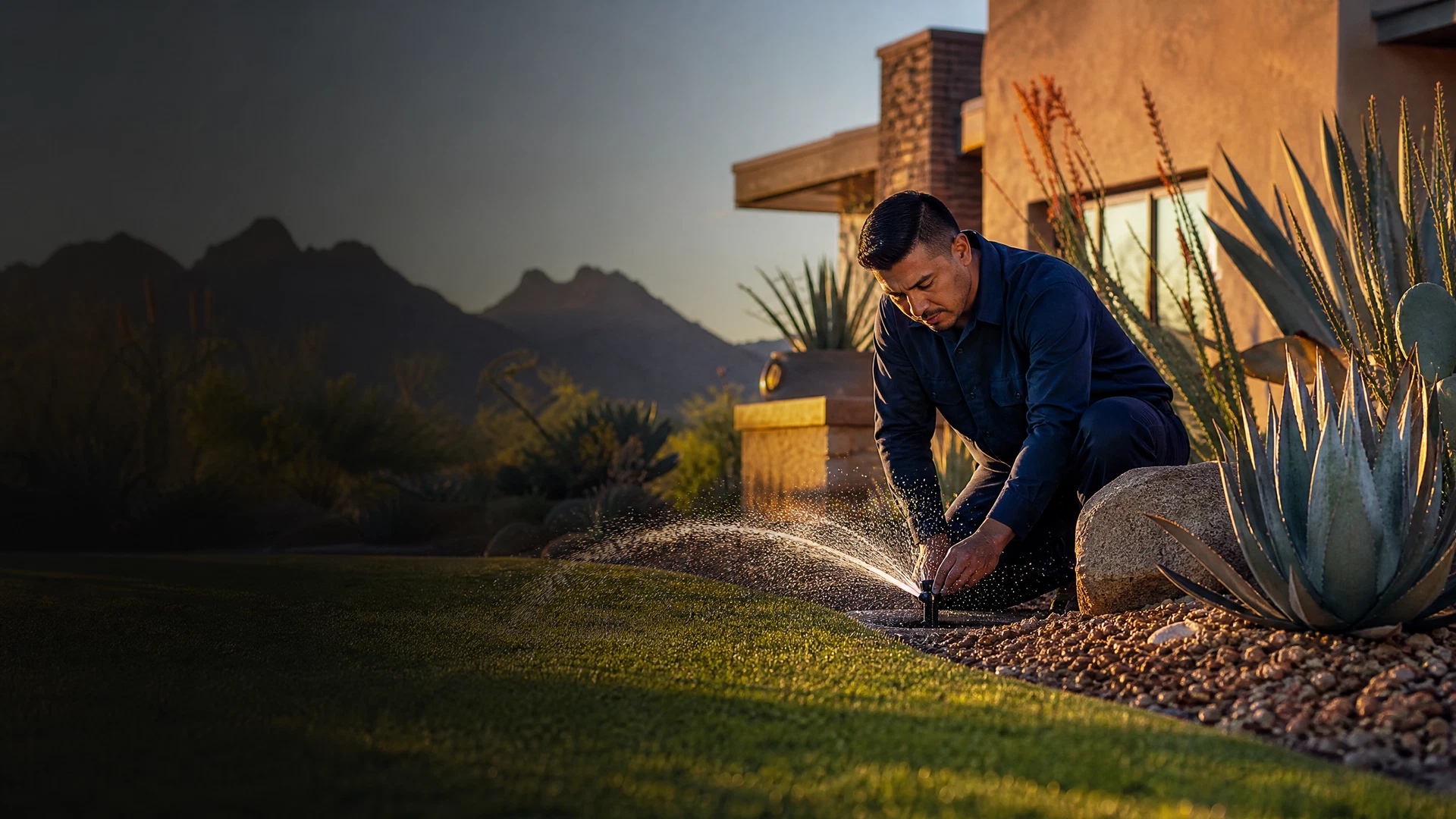
Replacing a broken sprinkler head is a straightforward process. First, ensure the water supply to the system is turned off. Carefully dig a small hole, about 5 to 6 inches deep, around the broken head to expose the riser. Unscrew the broken sprinkler head counterclockwise. It is highly recommended to take the broken head to a local hardware store to ensure you purchase an exact replacement in terms of size, brand, and spray pattern.[3]
Before installing the new head, briefly turn on the water to flush out any dirt or debris that may have fallen into the line during the removal process. Wrap the threads of the riser with plumber's tape to ensure a watertight seal, then screw the new sprinkler head on clockwise until it is hand-tight. Finally, adjust the nozzle to direct the spray toward your landscape and away from hardscapes like sidewalks or driveways.[3][1]
When to Call a Phoenix Irrigation Pro
While replacing a single broken sprinkler head is a manageable DIY project for many homeowners, certain situations require professional expertise. If you notice constant water leaks or pooling water when the system is turned off, this often indicates a faulty valve or a cracked underground pipe rather than just a broken head. These issues can be complex to locate and repair without specialized tools and knowledge.[3]
Additionally, ensuring proper head-to-head coverage and optimal water pressure is crucial for water conservation in the Phoenix area. If you are unsure about selecting the correct replacement head, or if your system continues to experience pressure issues after a replacement, it is best to consult a certified irrigation professional. They can perform a comprehensive system audit and ensure your irrigation system operates efficiently.[1]