
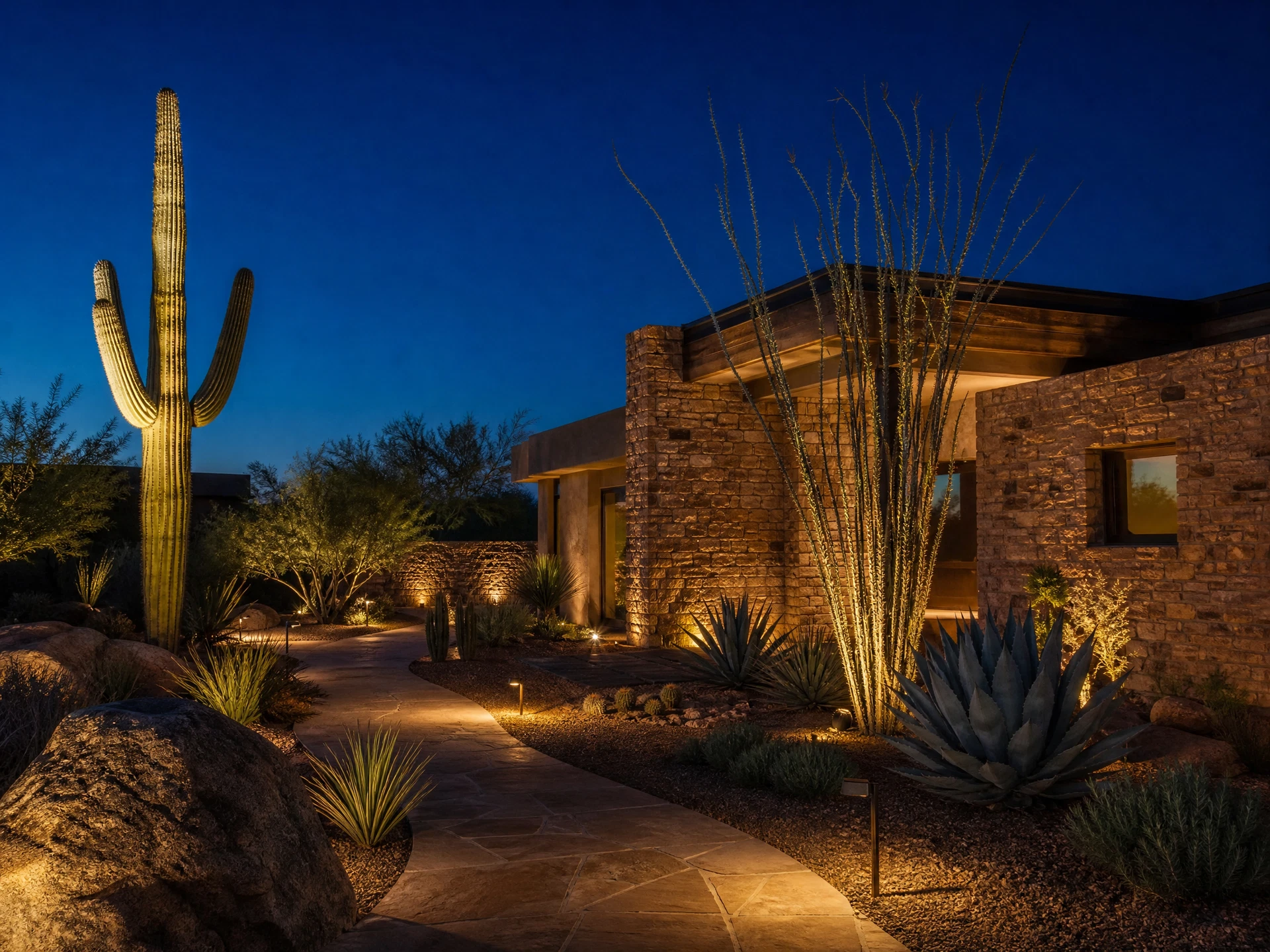
Understanding Solar and Low-Voltage Systems
Low-voltage landscape lighting systems draw power from your home's electrical grid. They use a transformer plugged into an outdoor outlet to step down the standard 120-volt power to a safer 12 to 15 volts. This steady power supply allows low-voltage fixtures to produce consistent, high-lumen output, making them ideal for illuminating large trees, architectural features, and long pathways.[1][2]
In contrast, solar landscape lights operate independently of the grid, using small built-in panels to charge batteries during the day. They typically operate at much lower voltages and produce significantly fewer lumens. While they are incredibly easy to install and require no trenching, their performance is heavily dependent on receiving adequate direct sunlight and is often inconsistent.[1][1][2]
Comparing Brightness and Reliability
The most noticeable difference between the two systems is brightness. Low-voltage landscape lights typically offer a lumen output of over 200, providing robust illumination for safety and aesthetics. Solar lights generally produce between 2 and 100 lumens, which is often described as a weak or pale light, suitable only for subtle accenting.[1][1][3]
Reliability is another major factor. Low-voltage systems deliver the same level of brightness every night, regardless of cloud cover or the changing seasons. Solar lights, however, suffer from inconsistent output; if a cloudy day occurs or a growing tree shades the panel, the light may barely function that evening. This makes solar lighting less dependable for security or primary pathway illumination.[1][1]
Making the Right Choice for Your Yard
For most permanent landscape designs in Arizona, low-voltage LED lighting is the recommended choice. High-quality fixtures made of solid brass or aluminum withstand the intense summer heat far better than the plastic housings often found on solar lights. Furthermore, low-voltage systems allow for precise control over color temperature and brightness, ensuring a warm, inviting glow that enhances desert landscaping.[2][3][2]
Solar lights still have a place in the Arizona landscape, particularly for temporary lighting or in remote corners of a property where running wire is impractical. However, homeowners should view solar lights as a short-term solution, as the batteries and plastic components frequently degrade quickly under the harsh desert sun. Investing in a professionally installed low-voltage system provides better long-term value and reliability.[1][3]