Common Causes of Stuck Sprinkler Heads
When a sprinkler head fails to pop up, the most frequent culprit is debris blocking the mechanism. Over time, dirt, sand, and grass clippings can wedge between the riser and the sprinkler body, preventing smooth operation. In areas with hard water or high mineral content, calcium buildup can also restrict movement, requiring the head to be manually pulled up and cleaned.[1][2]
Another major factor is low water pressure. If the pressure drops due to a cracked underground pipe, a partially closed valve, or too many heads on a single zone, the sprinkler will only partially pop up or remain stuck in the ground.[1][3]
How to Troubleshoot and Clean the Head
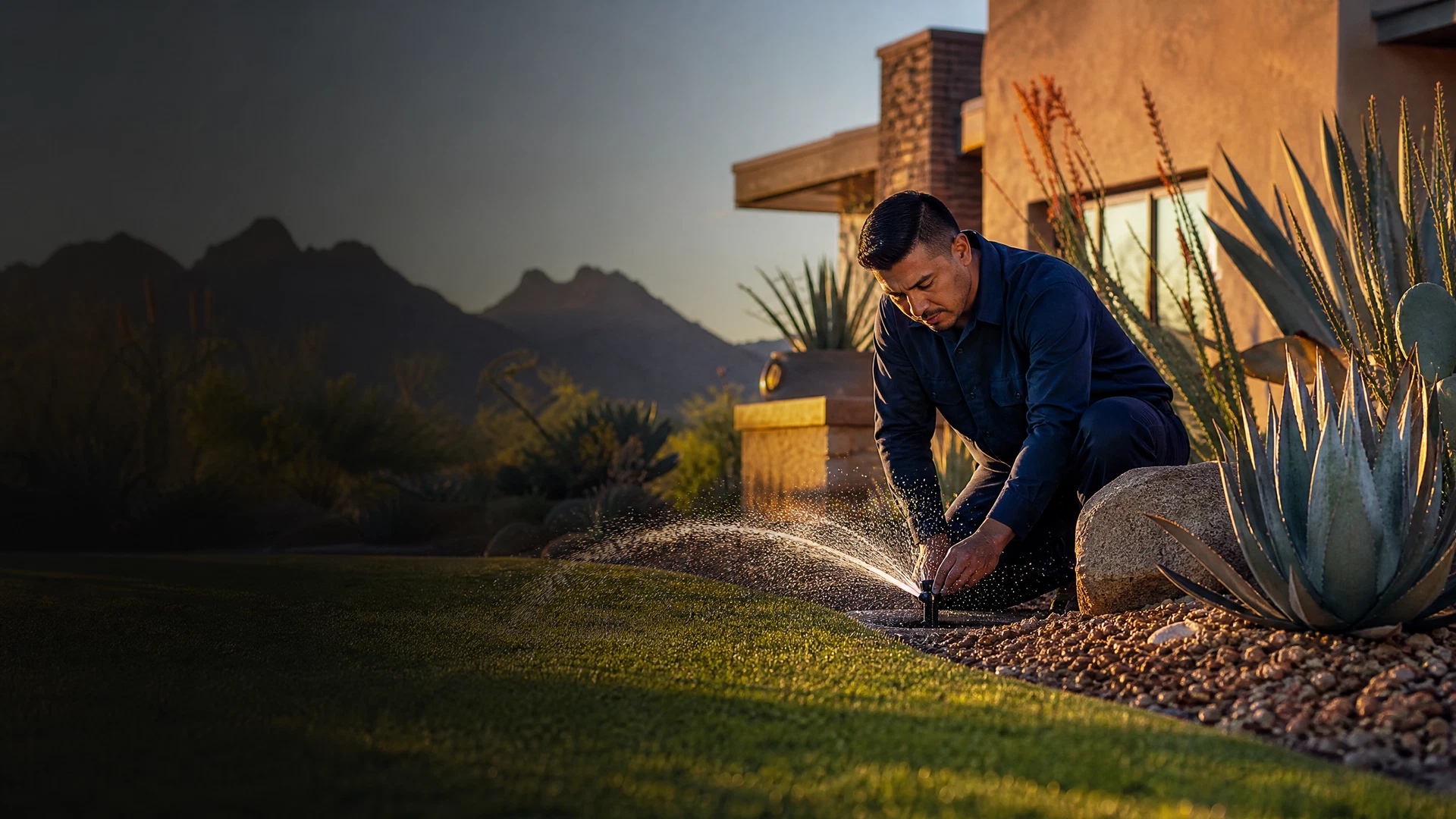
To diagnose a stuck sprinkler head, start by turning off the system and clearing away any overgrown grass or compacted soil around the base. Turn the water back on and gently step on the head, releasing it quickly; this method can sometimes flush out loose debris. If the head remains stuck, pull the riser up manually to inspect for trapped dirt or a damaged spring.[1]
For a more thorough cleaning, unscrew the nozzle and remove the internal filter screen. Rinse both components with clean water to remove grit and mineral deposits. While the nozzle is off, briefly turn on the zone to flush the line of any trapped debris before reassembling the head. If the riser seal is worn or the body is cracked, the entire sprinkler head should be replaced.[1][3]
Dealing with Arizona Soil Conditions
In the Phoenix metro area, the intense heat and hard caliche soil create unique challenges for irrigation systems. Caliche, a dense soil layer cemented by calcium carbonate, can restrict drainage and cause water to pool around sprinkler heads, accelerating the buildup of mud and mineral deposits. This hardened soil can also shift, misaligning sprinkler heads and preventing them from popping up straight.[2]
Additionally, the extreme summer temperatures and high UV exposure can degrade the plastic components of sprinkler heads faster than in milder climates. Routine seasonal maintenance, such as flushing the lines and inspecting for cracked housings or worn wiper seals, is essential to combat the wear and tear caused by the harsh Arizona environment.[2]