Understanding Mineral Buildup and Debris
In the Phoenix area, drip emitters frequently clog due to the high mineral content of the local water supply. As water evaporates in the desert heat, calcium and magnesium are left behind, forming crusty deposits that gradually block the small orifices of the emitters.[1]
Additionally, environmental factors contribute to the problem. Debris such as dirt, sand, and organic matter can enter the system, especially if the system's filtration is compromised, leading to immediate blockages.[1][2]
Cleaning vs. Replacing Emitters
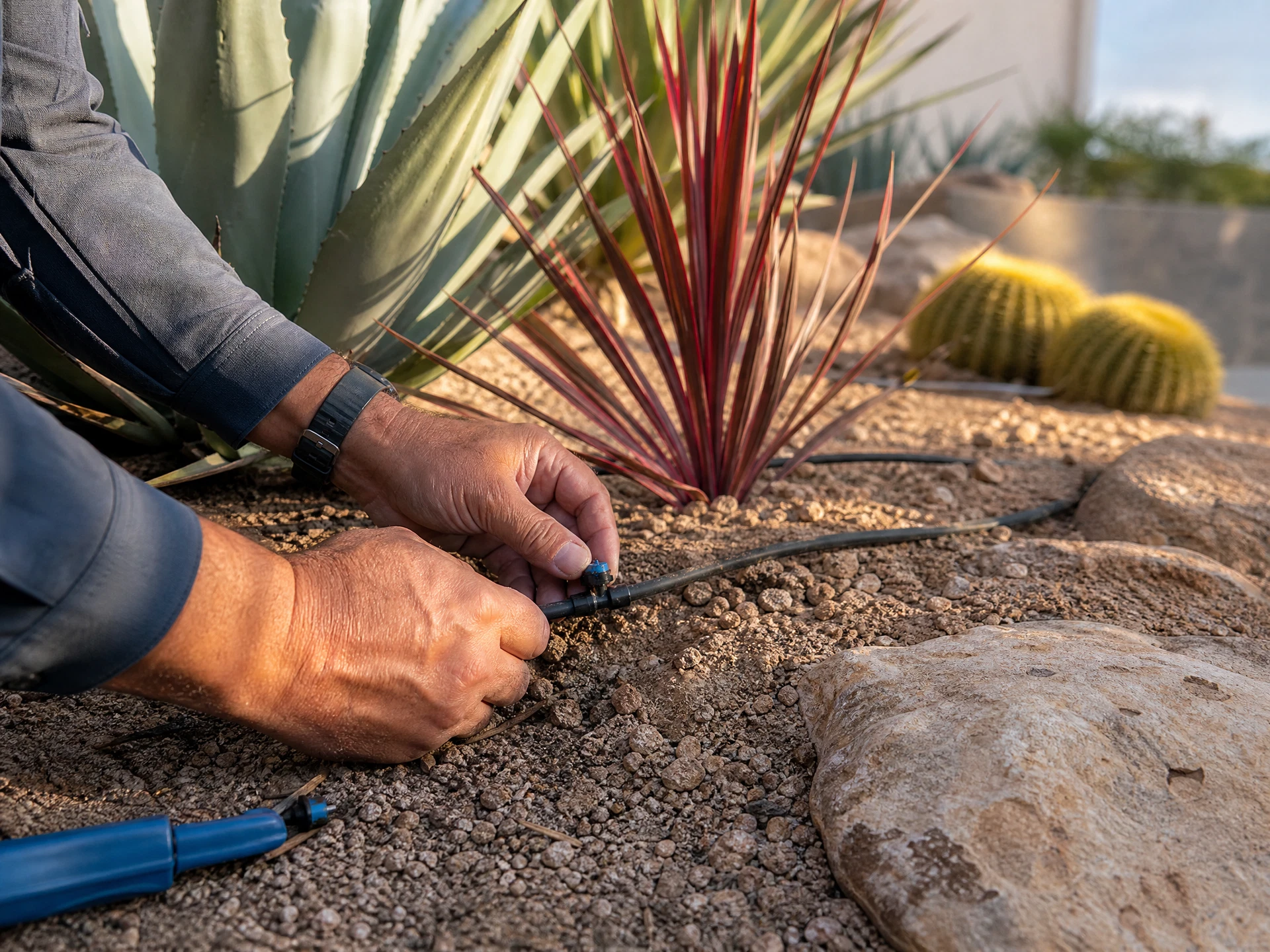
When dealing with clogged emitters, homeowners must decide whether to clean or replace them. For standard emitters, total replacement is often the most practical solution, as micro-debris can remain after cleaning and cause rapid re-clogging.[2]
For specialized or removable emitters, a soak in white vinegar can effectively dissolve mineral deposits. However, pressure-compensating emitters contain internal diaphragms that should not be opened, making replacement the only viable option when they fail.[2]
Maintaining Systems in Arizona
Arizona's intense heat and UV radiation can cause the plastic components of drip systems to become brittle and fail prematurely. To protect your investment, it is advisable to shield emitters and tubing with a layer of mulch or decorative rock.[1]
Regular maintenance is crucial for preventing clogs. Homeowners should periodically flush their irrigation lines and inspect filters to ensure they are free of debris, which helps maintain consistent water delivery to desert landscapes.[1][2]