Arizona Fall Planting & Drip Irrigation Guide
No lawn? Fall planting starts with the root zone and a working drip system.
Fall can be a useful planting window for many Arizona trees, shrubs, and wildflowers, but new plants depend on water reaching the developing root zone. Use this checklist to inspect emitters, move water away from the trunk, verify depth, find leaks and clogs, and update the system as the plant grows.
Verify the drip zone before new plants depend on it.
Send the property, planting area, plant type if known, and any visible leak, clog, pressure, or coverage concern. The current website request form is being used until the dedicated campaign form is ready.
Fall supports roots—but the irrigation still has to reach them.
Late September through early December is a favorable general window for many trees, shrubs, and spring wildflowers in central and southern Arizona. Warm soil can support root development before the following summer, although species and weather conditions remain important.[3]
New plants may require more frequent establishment watering than mature plants. Frequency should then be extended as roots establish; it should not remain fixed indefinitely.[3]
Right plant
Match the plant to sun, reflected heat, mature size, soil, drainage, and the property's landscape goal.
Right place
Leave room for the mature canopy and root system rather than placing emitters and plants for today's dimensions only.
Right delivery
Apply water through the root area at an appropriate depth and update emitter placement as the plant grows.
Inspect the complete water path before planting.
Move emitters toward the root zone
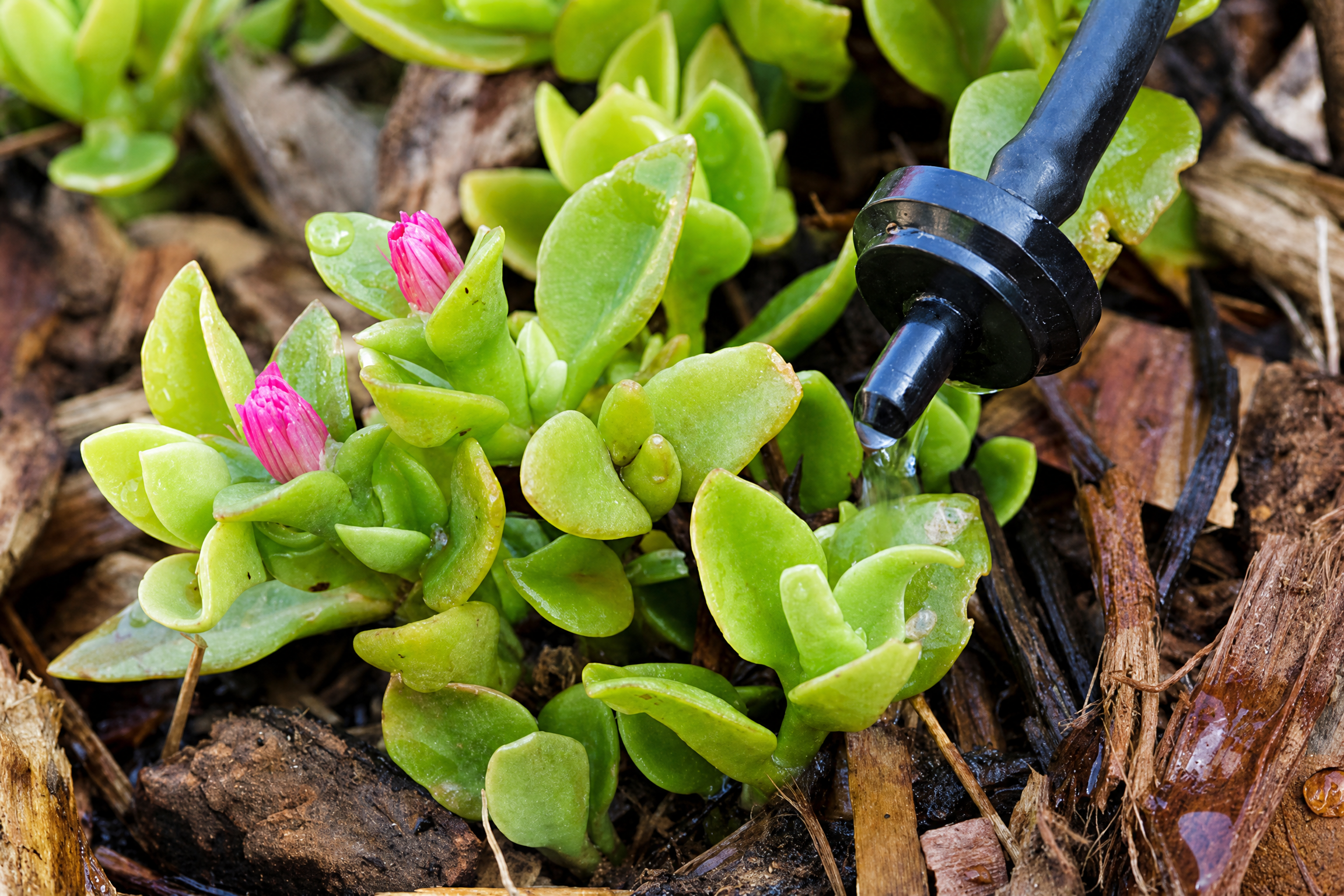
Water should not remain concentrated only against the trunk. As the canopy expands, move emitters outward and add capacity only when plant needs and zone design support it.
- Locate the current wetting pattern
- Check the canopy edge
- Keep emitters visible enough to inspect
Verify what happens below the surface
The general 1-2-3 guideline offers a depth target, but actual needs vary by species, soil, and establishment.
- About 1 foot for small plants
- About 2 feet for shrubs
- About 3 feet for trees
Find leaks, clogs, and disconnected tubing
Run the zone long enough to observe every emitter and connection instead of assuming the controller command equals water at the plant.
- Look for unusually wet spots
- Compare emitter flow
- Check crimps and exposed tubing
Maintain filtration and pressure control
Filters and pressure regulation help drip components operate as intended. Flush and service them according to the installed equipment.
- Inspect the filter
- Confirm regulator condition
- Flush debris when appropriate
The target moves as the plant grows.
A newly installed emitter near a small root ball may not remain correctly placed for a mature shrub or tree. Irrigation must evolve with the root system.
Support the root ball and adjacent soil
Apply water where roots can move outward while avoiding constant saturation directly against the trunk.
Expand the wetting area
Move or add emitters as roots and canopy spread, based on plant needs and system capacity.
Water broadly and deeply
Distribute water through the active root area and verify depth rather than relying on surface appearance.
A drip problem may hide until a plant is stressed.
One plant wilts
Possible causes include a clogged emitter, disconnected tubing, misplaced delivery, root damage, or a plant-specific issue.
Compare flow at neighboring emitters.One area stays wet
Possible causes include a line leak, missing emitter, excessive flow, low point, drainage issue, or schedule mismatch.
Find the water source before shortening every zone.Plants near trunks decline
Water may be concentrated at the trunk instead of distributed through the expanding root area.
Evaluate emitter placement and depth.Pressure varies
A filter, regulator, valve, tubing layout, or system demand issue may affect delivery across the zone.
Test the complete zone under operation.What you can document before requesting service.
These observations help the AIR team understand the system. Stop if water is uncontrolled, wiring is exposed, or the next step requires opening pressurized components.
Run the drip zone during daylight and locate every visible emitter.
Look for wet spots, dry emitters, split tubing, loose fittings, crimps, and chewed lines.
Use a soil probe after watering to check depth rather than judging only the surface.
Confirm emitters are distributed through the root area and not pressed against trunks.
Review the controller for old seasonal programs and unnecessary start times.
A zone will not start or shut off.
Pressure or flow changes across the zone.
Leaks are underground, inside a valve box, or difficult to isolate.
Emitter placement and flow need to be redesigned for mature plants or new planting.
The filter, regulator, valve, controller, or wiring requires service.
Put the water path where the developing roots can use it.
The emitter, wetting pattern, and root zone need to move together as the plant establishes and expands.

Landscaping Before You Sell? Start With a Strategy.
Arizona homeowners sometimes invest substantially in landscaping before putting a property on the market. Some improvements may support presentation and curb appeal; others may not be necessary for the property's likely buyer, price point, or listing timeline.
Before investing heavily in a property you may sell, Leandra Mora can help you consider which potential improvements fit the larger listing strategy.
This is property-strategy guidance, not a home inspection, appraisal, engineering evaluation, or promise that landscaping work will produce a particular return or property value.
Direct answers for Arizona homeowners.
These answers provide general educational context. Actual recommendations depend on the property, plant material, installed equipment, weather, pressure, soil, and what happens when the system runs.
When is the best time for fall planting in Arizona?
Late September through early December is a favorable general window for many trees, shrubs, and wildflowers in central and southern Arizona. Plant species, local weather, elevation, and site conditions still matter.
Where should drip emitters be placed around a tree or shrub?
Place water through the active root area rather than concentrating it only at the trunk. Move emitters outward as the canopy and root system expand, and follow species-specific planting guidance.
How deep should drip irrigation water?
The general 1-2-3 guideline is about one foot for small plants, two feet for shrubs, and three feet for trees. Actual depth and frequency depend on plant type, soil, weather, emitter flow, and establishment stage.
How often should I run drip irrigation for a new plant?
New plants generally need more frequent establishment watering, followed by progressively longer intervals as roots establish. There is no universal minute-based schedule; verify soil moisture and wetting depth.
How do I know whether a drip emitter is clogged?
Run the zone and compare visible flow at similar emitters. A dry root area, weak output, debris, or a plant declining while neighboring plants receive water can justify checking the emitter, filter, pressure, and tubing.
Why should drip emitters move as plants grow?
Roots and canopy spread outward. Moving delivery away from the original trunk area helps distribute water through the expanding active root zone instead of keeping one small spot wet.
Will a new drip system guarantee lower water bills or plant survival?
No. Water use and plant performance depend on design, installation, plant choice, weather, soil, maintenance, emitter placement, pressure, and scheduling. No specific saving or survival result can be promised.
Where the technical guidance comes from.
Product specifications and seasonal guidance are linked to primary manufacturers, University of Arizona resources, and Arizona water-conservation authorities. Confirm exact installed equipment and current manufacturer documentation before changing a system.
- [1]The Basics of Drip Irrigation for LandscapingUniversity of Arizona Cooperative ExtensionOpen source
- [2]Seasonal Maintenance Practices for Drip and Sprinkler Irrigation Systems in ArizonaUniversity of Arizona Cooperative ExtensionOpen source
- [3]Fall Planting with Water—Plant It WiselyWater—Use It WiselyOpen source
- [4]Landscape Watering by the NumbersWater—Use It WiselyOpen source
Not sure what the irrigation system actually needs?
Use the current service form to share the symptom and property details. Arizona Irrigation Repair can evaluate the system before you add run time, replace equipment, or invest in changes that may not address the cause.