Unexpected outdoor water use
Review meter clues, zone runtimes, valve behavior, and concealed line conditions when use changes without an obvious surface leak.
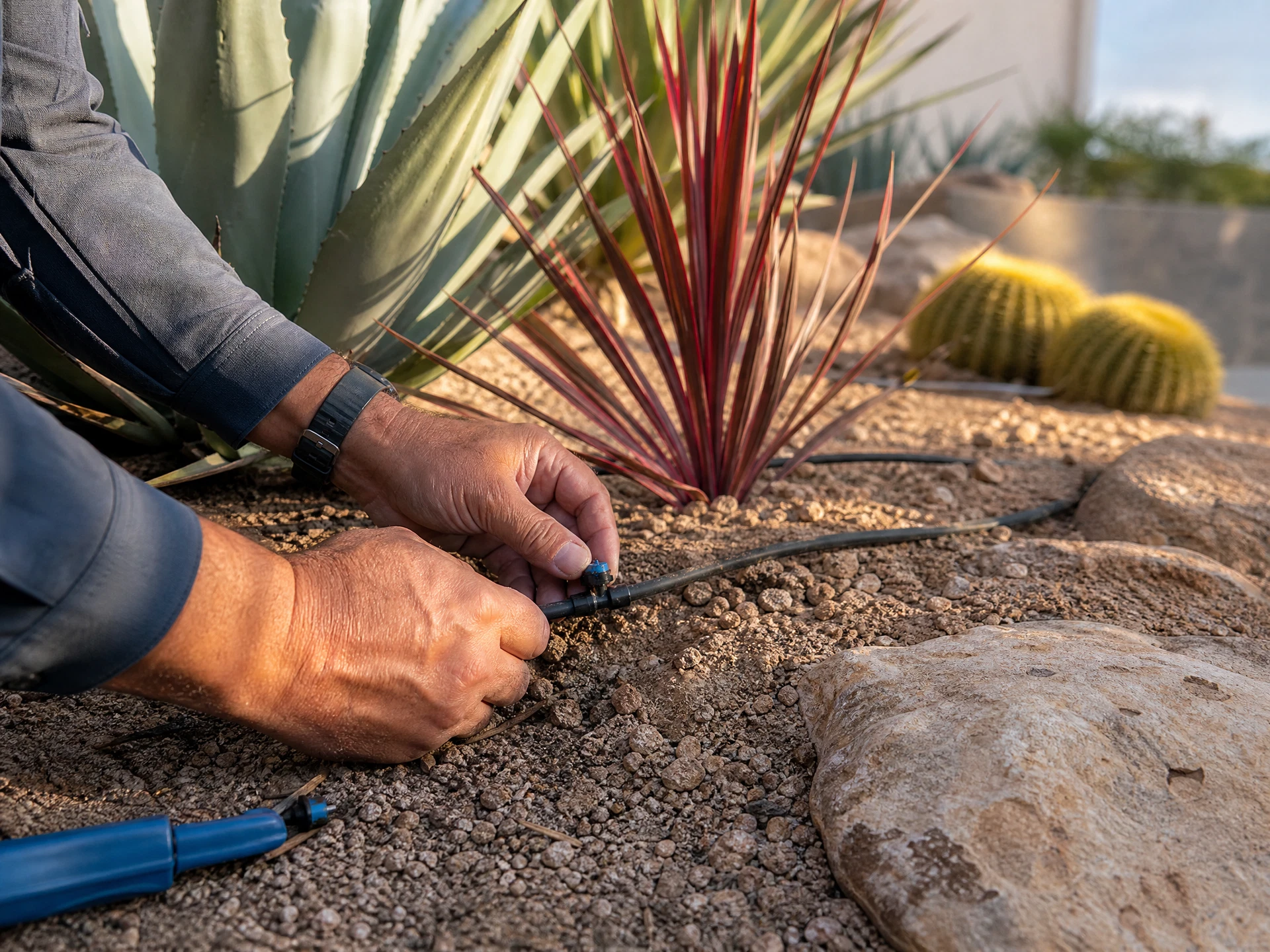
Arizona Irrigation Repair LLC evaluates Scottsdale irrigation systems for hidden leaks, overspray, seeping valves, uneven drip delivery, pressure problems, and schedules that no longer match the landscape. The onsite check follows the connected system before a repair or optimization path is recommended.
Tell us what you are seeing, where the water is going, and which zones may be affected. The form is ready now—no extra page or customer-service search required.
Scottsdale properties often combine desert plants, mature trees, turf, planters, and outdoor living areas across long drip runs and complex zones. Water waste may appear as wet rock, dry plants despite long cycles, hardscape overspray, valve seepage, or scheduling that treats unlike plant areas the same.
A Scottsdale landscape can look dry in one area and remain chronically wet in another even when every zone turns on. Clogged emitters, damaged poly line, mineral-affected valves, changed plant material, long distribution runs, and controller schedules can create connected symptoms that are easy to misread from the surface.
Our water-efficiency process starts with the visible concern and traces it through the controller, valve response, pressure, piping, sprinkler coverage, and drip delivery. The objective is to repair the condition that is wasting water, preserve components that still work, and explain which scheduling or distribution changes are practical for the existing landscape.
Route broader repairs through Scottsdale serviceThese are starting points for onsite testing, not automatic conclusions about which component needs replacement.
Review meter clues, zone runtimes, valve behavior, and concealed line conditions when use changes without an obvious surface leak.
Check sprinkler alignment, nozzle selection, head height, pressure, spacing, and obstructions that send water onto pavement.
Test valves, buried fittings, poly line, and drainage patterns when moisture remains after a scheduled cycle.
Inspect clogged emitters, missing outlets, damaged micro-tubing, pressure loss, and placement around expanding root zones.
Separate nozzle, spacing, pressure, grade, and head-position problems that can lead to longer runtimes without even delivery.
Review watering days, start times, runtimes, overlapping programs, and current plant-zone groupings.
Test controller output, wiring, solenoids, valve response, and programming when irrigation starts or continues at the wrong time.
Inspect diaphragms, seats, solenoids, and manifolds when a valve seeps, sticks, chatters, or does not open fully.
Improvement may involve more than one connected part. Each field method leads to the repair, inspection, or control check that fits the tested condition.
Isolate affected zones and follow wet-soil, pressure, valve, and meter clues before excavation or part replacement.
Open this repair routeAdjust or repair heads, nozzles, spacing, and alignment so water stays on the intended landscape.
Open this repair routeRepair line, fittings, emitters, distribution tubing, and pressure conditions that prevent consistent root-zone delivery.
Open this repair routeIdentify pressure conditions connected to misting, weak coverage, inconsistent drip output, or zone imbalance.
Open this repair routeReview start times, watering days, runtimes, seasonal changes, and zones with incompatible plant needs.
Open this repair routeConsider compatible Wi-Fi or weather-responsive controls only after field wiring, valves, and delivery zones are verified.
Open this repair routeUse periodic zone checks to identify failed components and schedule drift before the symptoms spread.
Open this repair routeWe connect what the homeowner notices to the hydraulic, electrical, distribution, or scheduling condition that should be tested next.
How irrigation diagnostics work| Visible signal | Possible connected cause | Waste pattern | Diagnostic next step |
|---|---|---|---|
| Unexpected outdoor use | Hidden leak or excessive runtime | Continuous flow or repeated overwatering | Zone isolation and schedule review |
| Wet driveway or walkway | Overspray, changed grade, or damaged head | Water delivered to hardscape | Coverage and nozzle correction |
| Valve area stays damp | Mineral buildup, debris, or worn diaphragm | Ongoing low-volume seepage | Valve testing and repair |
| Dry plant beside wet rock | Clogged outlet or broken drip line | Water delivered away from the root zone | Drip distribution repair |
| Fine sprinkler mist | Pressure or nozzle mismatch | Poor delivery before water reaches soil | Pressure and nozzle evaluation |
| Multiple starts in one day | Overlapping controller programs | Unintended repeated cycles | Program and start-time cleanup |
| Runoff from a long cycle | Runtime exceeds soil intake | Water leaves the intended area | Coverage repair and cycle review |
Water efficiency is an outcome of correct diagnosis, repair, delivery, and programming—not a separate claim detached from the field system.
Call to confirm current scheduling for your address, landscape, and system condition.
Check availabilityRemote guidance cannot confirm the failed component. Call if a zone will not shut off or active water is reaching pavement or a structure.
Common clues include unexpected outdoor water use, wet rock or pavement, runoff, valve seepage, dry plants despite long cycles, repeated controller starts, and irrigation operating outside the intended schedule. Testing determines whether the cause is hydraulic, electrical, distribution-related, or programmed.
Yes. We can inspect head height, alignment, nozzle type, spacing, pressure, grade changes, and plant obstructions. The repair depends on what the zone does during operation rather than assuming every overspray problem needs the same part.
A buried line failure, seeping valve, repeated start time, excessive runtime, or drip leak beneath landscape rock may not create an obvious spray. Zone testing and meter clues can help narrow the source.
Often, yes. We can check pressure, poly line, fittings, distribution tubing, emitter condition, outlet placement, and whether the zone is serving too many unlike plant areas. Recommendations depend on the system found onsite.
Those landscape areas generally have different delivery and timing needs. We can review how they are zoned and programmed, then explain whether schedule changes or field modifications are appropriate.
Not necessarily. A controller cannot repair leaking pipe, failed valves, damaged wiring, poor pressure, clogged emitters, or incorrect sprinkler coverage. We verify the connected field system before recommending a compatible control upgrade.
Send the visible symptom, affected zone, and timing through the request form. We will use that context to prepare for a cause-first onsite diagnosis.
Use the dedicated page for your repair or community, then confirm the property address and current appointment availability.
AIR // QUICK SERVICE REQUEST
Enter the exact property address below so the team can confirm route availability.
Need immediate help? Call (602) 905-4494.