Difficult seasonal scheduling
Replace a hard-to-manage clock timer with controls that make active days, run times, seasonal adjustments, and weather-responsive settings easier to review.
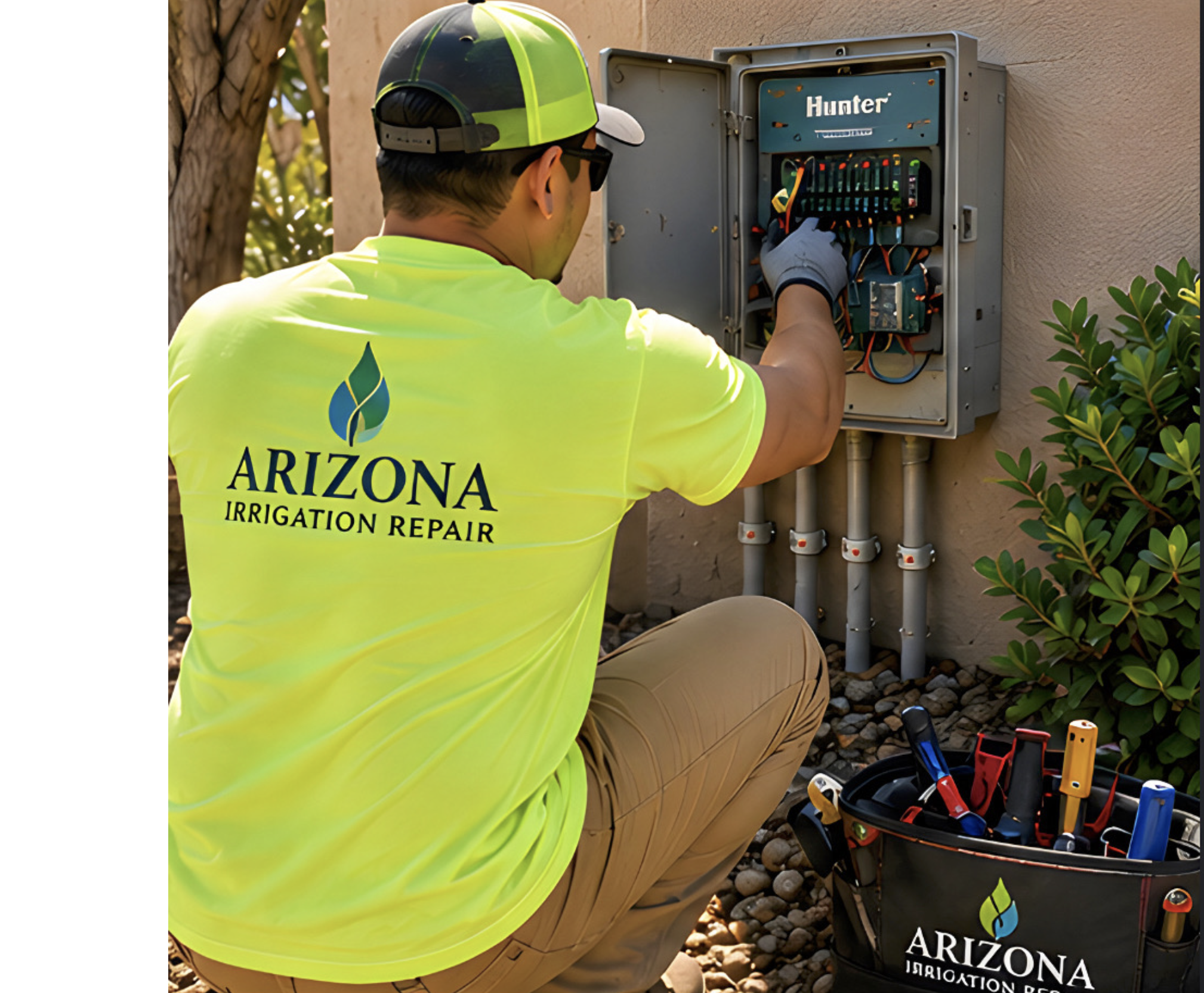
Arizona Irrigation Repair LLC installs and configures compatible smart irrigation controllers for Phoenix-metro homes. Service can include reviewing the existing timer, station count, power, accessible field wiring, valves, Wi-Fi conditions, optional sensors, zone labels, weather settings, schedules, app access, and test cycles before the new controls are turned over to the homeowner.
A connected controller can make schedules easier to review, provide remote controls, and use weather-responsive settings when the selected model and property support those features. The upgrade still depends on accurate zone information, reliable station output, compatible field wiring and valves, available power, and usable Wi-Fi at the controller location.
Before recommending installation, we separate controller needs from unresolved field failures. A new timer cannot correct a leaking valve, broken pipe, failed solenoid, damaged wire, low pressure, clogged emitter, or poor sprinkler coverage. Those conditions should be identified so the smart features begin with a system that responds predictably.
Compare how each control approach handles schedules and connected features. The right choice still depends on the existing stations, wiring, valves, coverage, network conditions, and how you prefer to manage watering.
| Comparison point | Conventional timer | Smart controller |
|---|---|---|
| Schedule control | Programs are managed at the controller panel with assigned days, start times, and run times. | Schedules can be adjusted at the controller and, when supported, through a connected app. |
| Remote access | Onsite panel access is normally required to review or change programming. | Compatible hardware and a working connection can allow remote schedule review and changes. |
| Weather inputs | Schedule changes are manual unless a compatible separate sensor is installed and configured. | Compatible weather-responsive features can adjust or pause schedules using configured weather inputs. |
| Connectivity | Programmed cycles generally do not depend on home Wi-Fi. | Connected features depend on controller compatibility, power, network reach, and account or app setup. |
| Zone setup | Every station still needs correct wiring, labels, start times, and run times. | Every station still needs correct wiring, labels, and accurate plant, soil, exposure, and run-time settings. |
| Field-system limits | Timer changes do not repair leaking valves, broken pipe, clogged emitters, pressure problems, or poor coverage. | Automation does not repair leaking valves, broken pipe, clogged emitters, pressure problems, or poor coverage. |
| Best fit | A stable, simpler schedule where the homeowner prefers onsite controls. | A compatible system where the homeowner wants remote visibility and more flexible schedule management. |
The visible symptom sets the first test point, but the repair still depends on how the connected controller, wiring, valve, pressure, pipe, head, or emitter behaves onsite.
Replace a hard-to-manage clock timer with controls that make active days, run times, seasonal adjustments, and weather-responsive settings easier to review.
Set up supported app access and homeowner controls when Wi-Fi conditions and the selected controller allow reliable connected operation.
Operate accessible zones, identify active stations, and organize labels before automated schedules depend on incorrect zone information.
Evaluate station count, power, wiring, valves, sensors, and homeowner priorities before selecting a compatible replacement path.
We follow the command, flow, wiring, or delivery path that applies to the service rather than replacing the first visible part.
Schedule this serviceWe document the current timer, active station count, power, accessible wiring, optional sensors, Wi-Fi conditions, and known field-system problems.
The compatible controller is mounted and connected, then location, zone, schedule, weather, app, and sensor settings are configured as supported.
Accessible stations are tested, practical labels and initial settings are reviewed, and the homeowner is shown the main manual, pause, schedule, and seasonal controls.
A controller selected around station count, power, field wiring, Wi-Fi conditions, and desired features
Clearer zone labels and an initial schedule tied to the system found onsite
Supported weather, app, and sensor settings configured without implying the controller repairs field failures
A practical explanation of manual operation, schedule changes, rain delays, and seasonal review
Use these source-supported guides to identify the failure pattern, note safe observations, and understand when onsite testing becomes the better next step.
Open all controllers & wiring answersUse the dedicated page for your repair or community, then confirm the property address and current appointment availability.
Call for advice tied to the behavior of your own system.
Talk with our teamA conventional timer generally follows fixed programs entered at the device. A compatible smart controller may add app access, connected alerts, weather-responsive adjustments, and easier seasonal controls. Available features depend on the selected model, connection, sensors, and setup.
It may, but compatibility should be checked against station count, power, field wiring, valves, pump or master-valve needs, sensors, enclosure location, Wi-Fi conditions, and the selected controller. Existing field problems should be diagnosed before the upgrade is treated as complete.
Many connected features require usable Wi-Fi at the controller location, but exact offline and local-control behavior varies by model. Wi-Fi strength, network access, app requirements, and homeowner preferences should be reviewed before installation.
No. A controller cannot repair broken pipe, leaking valves, failed solenoids, damaged field wire, pressure restrictions, clogged emitters, or poor sprinkler coverage. Those failures require separate testing and repair.
Scope can include reviewing the existing controller and stations, installing a compatible replacement, connecting supported wiring and sensors, labeling accessible zones, configuring location and weather settings, establishing an initial schedule, connecting supported app access, running test cycles, and explaining the main controls.
Supported controllers can use weather inputs and property settings to modify scheduled watering. Useful results depend on accurate location, zone, plant, soil, application, and seasonal information, plus periodic homeowner review. Automation should not be treated as a substitute for observing the landscape and repairing system failures.
Send the system symptoms through the live request form. Call (602) 905-4494 for immediate help with an active leak or a zone that will not shut off.
AIR // QUICK SERVICE REQUEST
Enter the exact property address below so the team can confirm route availability.
Need immediate help? Call (602) 905-4494.