Safe Water Activation and Initial Inspection
Starting your irrigation system after winter requires a cautious approach to prevent damage. The most critical step is slowly opening the main water valve to allow pipes to fill gradually. Opening valves too quickly subjects mainlines to high surge pressures and water hammer, which can crack or burst pipes. Once the water is on, inspect the backflow prevention device for leaks. While occasional dripping may occur during pressurization, continuous puddling indicates a potential failure.[1][2]
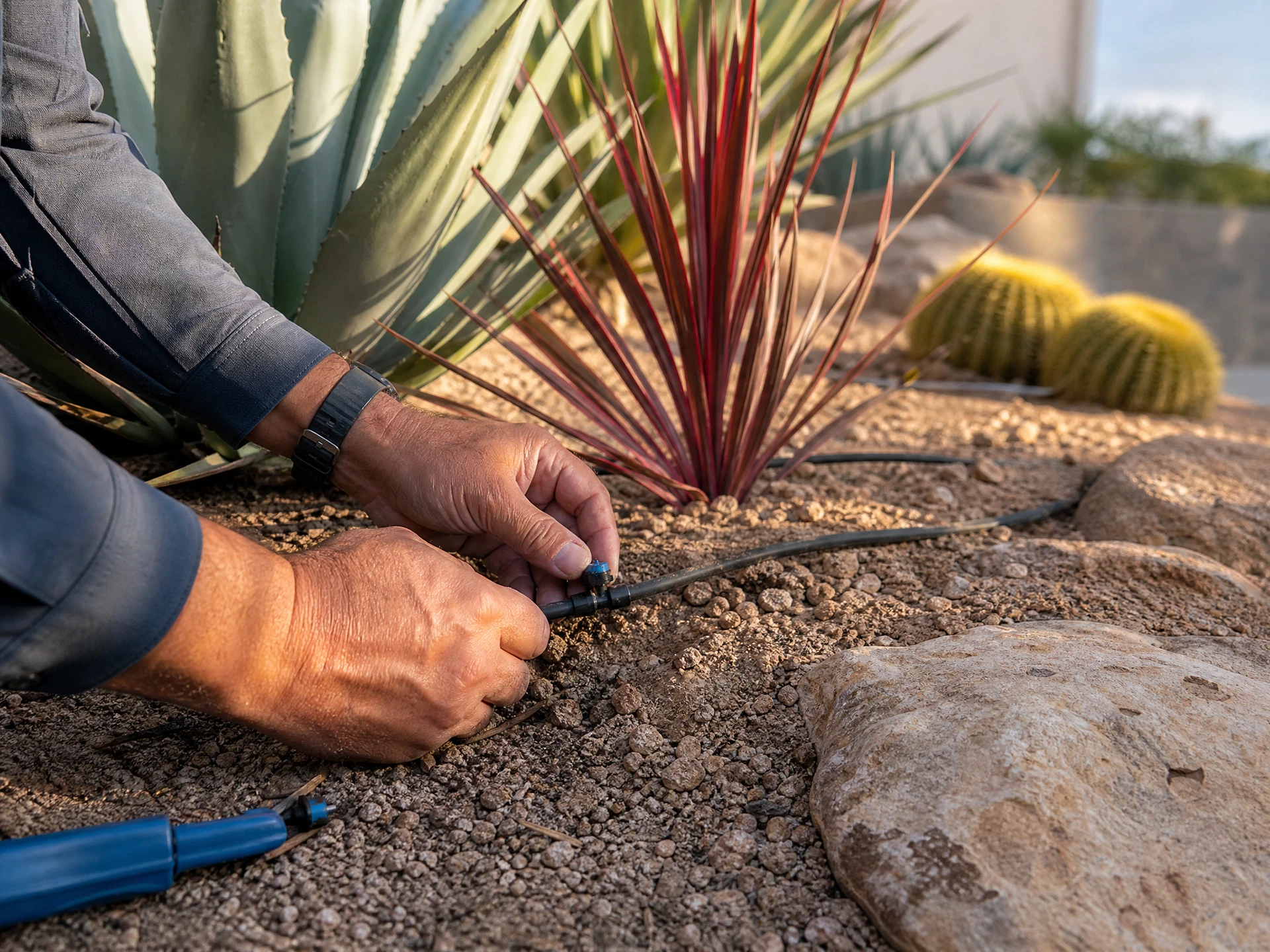
Before running the system, conduct a visual inspection of the yard. Look for missing or broken drip emitters, cracked tubing, and damaged sprinkler heads. In Arizona, checking for leaks early in the season is vital, as a minor leak can waste thousands of gallons of water monthly. Ensuring all above-ground components are intact prevents uneven watering and excessive runoff.[2]
Testing Zones and Checking Pressure
After the main water supply is safely restored, manually activate each irrigation zone from the controller. Walk through every station while it runs to verify proper operation. Confirm that sprinkler heads rotate correctly, provide adequate coverage, and are not obstructed by dirt or debris. For drip systems, ensure water trickles rather than squirts from emitters, which indicates a broken or missing part.[1][2]
Monitoring system pressure during the test is essential. Low pressure often points to a line break or a missing sprinkler head, while excessively high pressure can cause misting and water waste. In subsurface drip systems, significant flow rate variations may indicate clogged emitters or damaged lateral lines. Identifying and repairing these issues early ensures optimal distribution uniformity throughout the landscape.[1][3]
Controller Updates and Water Conservation
Updating the irrigation controller is a crucial part of the spring startup. Adjust the watering schedule to accommodate the increasing temperatures in Arizona, transitioning from winter dormancy to active spring growth. This is also the ideal time to replace the backup battery in the controller and clean any weather sensors connected to the system. Proper scheduling ensures plants receive adequate moisture without overwatering.[1]
Arizona's arid climate demands efficient water use, making system maintenance an investment in long-term sustainability. Properly maintained drip and sprinkler systems lead to significant water savings and lower operational costs. If you notice a persistent drop in system pressure or suspect an underground leak, it is best to consult an irrigation professional to resolve the issue before the peak summer heat arrives.[3]