Understanding Arizona Water Conservation Strategies
Conserving irrigation water in the Arizona desert requires a strategic approach that balances plant health with efficient water use. According to the Arizona Municipal Water Users Association (AMWUA), one of the most effective ways to save water is by adjusting irrigation schedules at least four times a year to reflect seasonal changes. By matching water output to the actual needs of the plants during different weather conditions, homeowners can significantly reduce water waste and lower their utility bills.[1]
In addition to seasonal adjustments, the method of watering plays a crucial role in conservation. Experts recommend watering deeply but infrequently, which encourages strong, healthy root systems that can better tolerate intense heat and drought. For example, water should reach a depth of three feet for trees, two feet for shrubs, and one foot for smaller plants. This practice prevents the shallow root growth associated with frequent, light watering and minimizes water lost to evaporation.[1][2]
Maintaining Your Irrigation System
Regular maintenance of your irrigation system is essential for preventing water waste and ensuring optimal performance. The EPA advises homeowners to inspect their systems monthly for leaks, broken or clogged sprinkler heads, and other mechanical issues. A poorly maintained system can waste thousands of gallons of water through undetected leaks or misdirected spray that waters sidewalks and driveways instead of the landscape.[3]
To maximize efficiency, homeowners should also practice "zone defense" by grouping plants with similar water needs together in the same irrigation zone. Turf areas, planters, trees, and shrubs should be watered on separate schedules to accommodate their varying requirements. Taking the time to clean microirrigation filters and clear obstructions from sprinkler heads ensures that water is distributed evenly and efficiently across the yard.[3][1]
Upgrading to Smart Irrigation Technology
Advancements in irrigation technology offer Arizona homeowners powerful tools for water conservation. The EPA WaterSense program highlights the benefits of weather-based irrigation controllers, which automatically adjust watering schedules based on local weather data and landscape conditions. By replacing standard clock timers with smart controllers, homeowners can ensure their landscapes receive only the water they need, preventing unnecessary irrigation during cooler or wetter periods.[3]
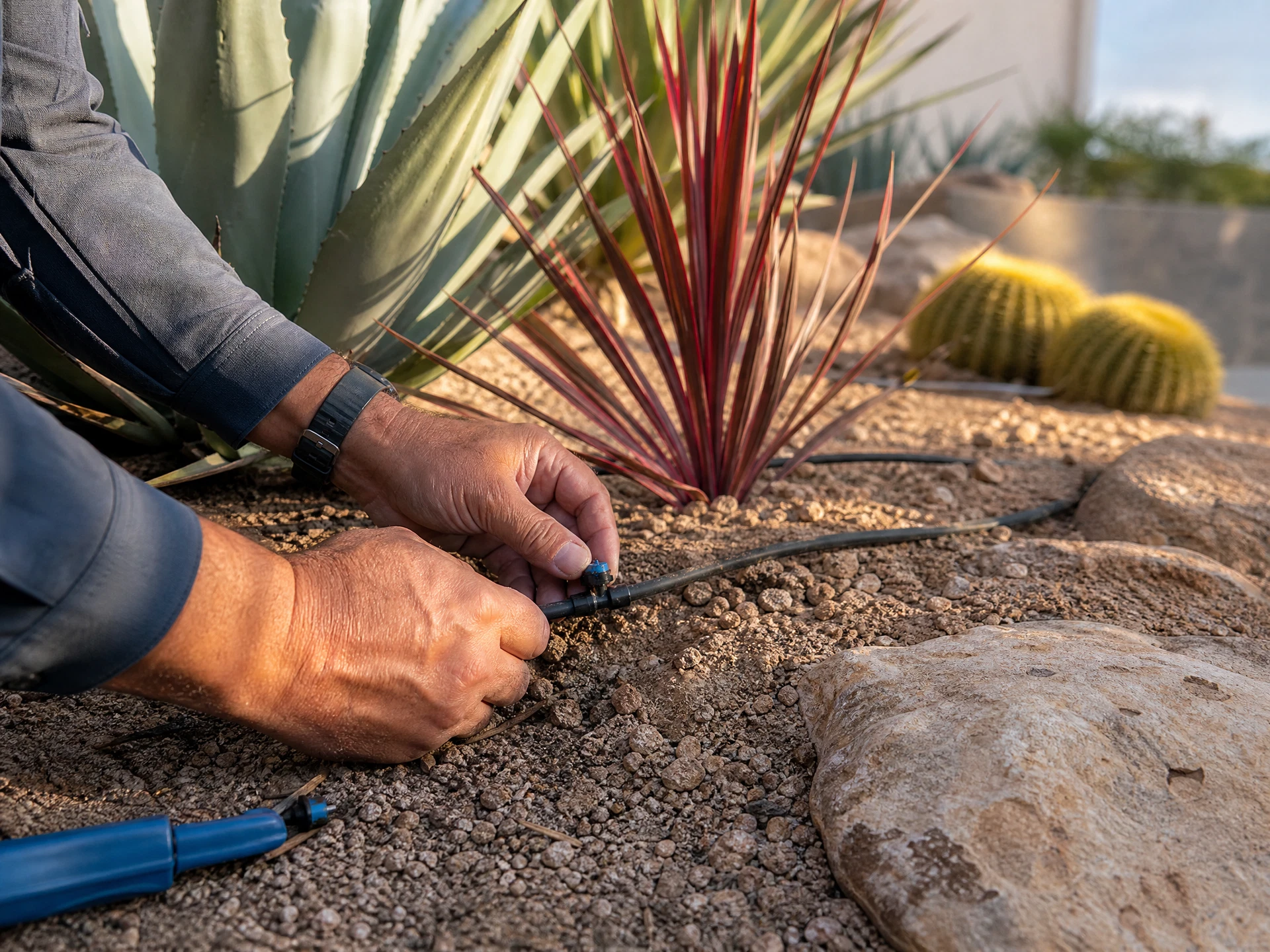
Furthermore, incorporating soil moisture sensors and pressure-regulating sprinkler bodies can optimize water delivery. Soil moisture sensors tailor irrigation by measuring the actual moisture in the ground, while pressure-regulating bodies prevent sprinklers from misting or spraying water too quickly, which often leads to runoff. The University of Arizona Cooperative Extension also emphasizes that transitioning to efficient drip irrigation for shrubs and trees delivers water directly to the root zone, significantly reducing evaporation and waste.[3][4]