Mineral deposits and sticking parts
Inspect buildup that affects solenoids, bleed controls, diaphragms, and internal sealing surfaces.
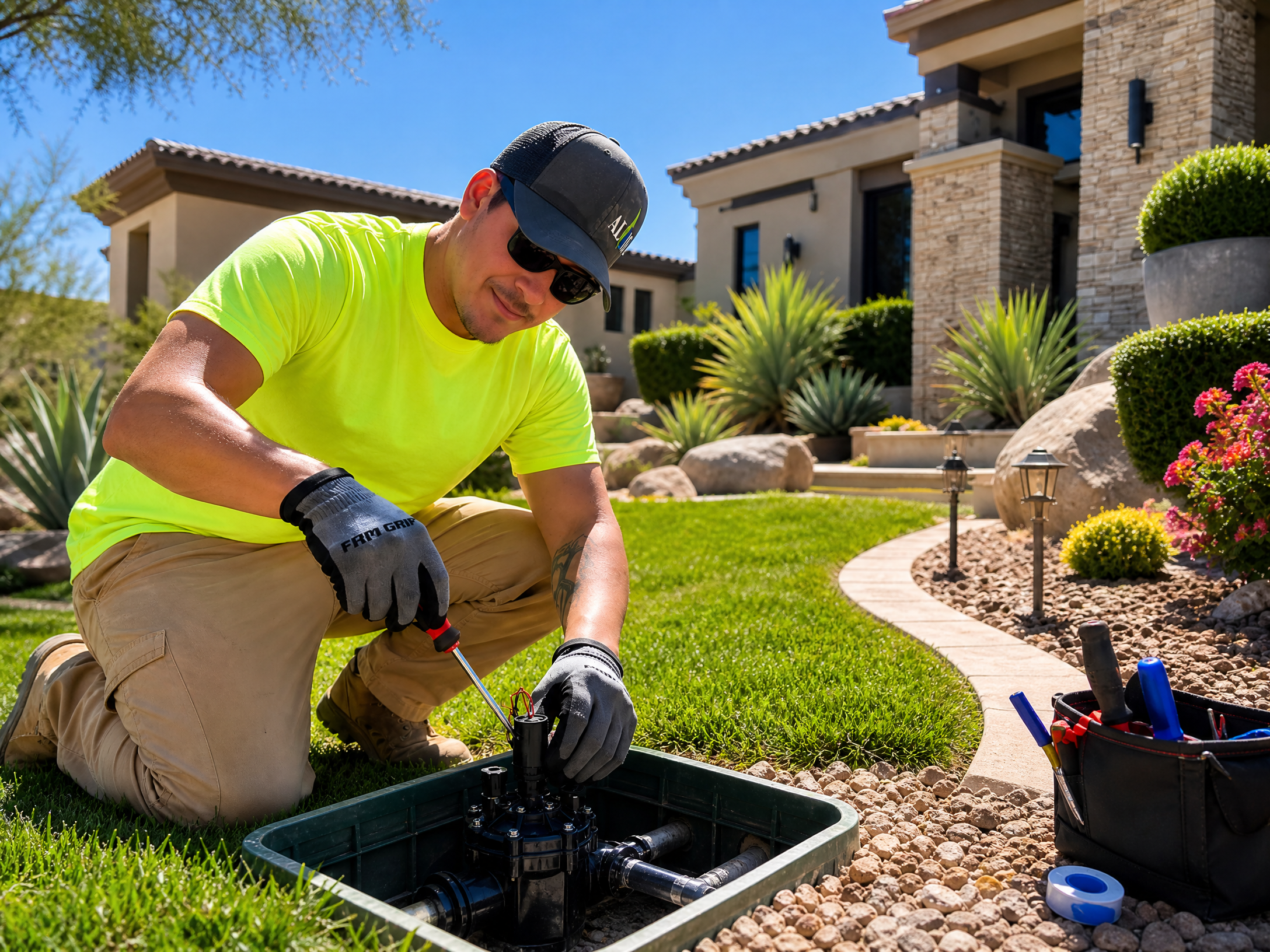
Arizona Irrigation Repair LLC repairs Scottsdale irrigation valves that leak, seep, chatter, stay open, or fail to start. Diagnosis separates controller and wiring commands from solenoid, diaphragm, debris, pressure, fitting, and manifold problems before a targeted repair or replacement is recommended.
Scottsdale valve assemblies may serve long drip runs, turf, pots, trees, or renovated beds from compact boxes surrounded by rock and mature roots. Mineral deposits and previous repairs can complicate access and sealing.
We test electrical commands and hydraulic valve behavior, then explain whether the likely fix involves wiring, a solenoid, internal components, fittings, or replacement.
These patterns are not automatic conclusions. They are useful starting points for testing the affected system at the property.
Inspect buildup that affects solenoids, bleed controls, diaphragms, and internal sealing surfaces.
Locate and access buried or overgrown boxes without assuming every wet area begins directly above the valve.
Trace the correct zone and evaluate adjacent fittings when one repair may affect the shared assembly.
The local pattern helps set priorities, but the repair still depends on how the controller, wiring, valves, pressure, piping, or delivery components behave onsite.
Check manual controls, solenoid position, debris, diaphragm condition, pressure behavior, and wiring commands.
Test controller voltage, field wire, solenoid response, flow control, internal restrictions, and supply conditions.
Identify cracked fittings, threaded connection failures, body damage, seals, and pipe movement around the assembly.
Distinguish a valve that is not sealing from low-head drainage or water stored in downstream piping.
We work through the components related to the symptom and explain the recommended next step before larger work proceeds.
Schedule in ScottsdaleWe operate the zone electrically and manually when appropriate and observe shutoff, flow, noise, and leakage.
Controller output, wiring, solenoid, diaphragm, internal condition, and pressure are checked in sequence.
Approved repairs are completed, then the zone is started and stopped to verify response and sealing.
View local neighborhoods, broader system problems, city water-efficiency context, and every dedicated service page.
View Scottsdale hub Service guideReview the complete service scope, general failure patterns, process, outcomes, and answers for homeowners across the Valley.
View main service guideThese guides explain separate symptoms and decisions inside the same system, with visible sources and clear limits on remote diagnosis.
Open the valves & hidden leaks topic hubCall to confirm current scheduling for your neighborhood and system needs.
Check availabilityUse the dedicated page for your repair or community, then confirm the property address and current appointment availability.
Call if the system is actively leaking or a zone will not shut off.
Talk with our teamDeposits or debris can affect bleed controls, diaphragms, internal passages, and sealing surfaces. Testing valve response and inspecting serviceable parts helps determine whether cleaning, an internal repair, a solenoid, or replacement is appropriate.
Decorative rock, sediment, roots, landscape changes, and water traveling below grade can hide the box or move the visible wet area away from the source. Valve locating and system operation may be needed before excavation.
The controller may be sending power, the solenoid may be damaged, debris might block the diaphragm, or internal parts could be worn. Shut off the irrigation water supply if flow is uncontrolled and call for service.
Often, yes, if the valve body and compatible internal components remain serviceable. Testing confirms whether the failure is limited to the solenoid or involves wiring or the valve itself.
The source could be an active valve or fitting leak, water draining from a downstream zone, or unrelated runoff. Operating and isolating the system helps identify the source.
Yes. We inspect valves, adapters, tees, unions, threaded fittings, pipe connections, and available working space before recommending a targeted manifold repair or rebuild.
Send the system symptoms through the live request form. Call (602) 905-4494 for immediate help with an active leak or a zone that will not shut off.
AIR // QUICK SERVICE REQUEST
Enter the exact property address below so the team can confirm route availability.
Need immediate help? Call (602) 905-4494.