Understanding Phoenix Landscape Watering Needs
Watering a landscape in the Phoenix area requires understanding that a single, year-round schedule will not work. The Arizona Municipal Water Users Association (AMWUA) advises adjusting irrigation controllers at least four times a year to match seasonal weather changes. Leaving a summer schedule running during the winter will overwater and potentially harm plants, while a winter schedule in July will quickly cause severe drought stress.[1]
In addition to seasonal adjustments, different types of plants require vastly different watering frequencies. For example, in peak summer heat, established Bermuda grass needs water every 3 to 4 days, while desert-adapted trees only need watering roughly once every 17 days. Because of these differing needs, it is crucial to group plants with similar water requirements on the same irrigation valve, a practice known as hydrozoning.[2]
Adjusting for Seasons and Plant Types
The most critical adjustments to your watering schedule occur as the seasons transition. In the spring, as temperatures climb, watering intervals must shorten from their winter settings to prepare plants for the heat. During the peak of summer, intervals are at their tightest. Conversely, as autumn cools into winter, evaporation rates drop, and established desert plants require significantly less frequent watering.[1]
Newly planted trees and shrubs require a completely different approach than established ones. A new plant's root system is confined to its original root ball and needs frequent watering—every 1 to 2 days in summer for the first two weeks—to survive. As the plant establishes over several months, the watering frequency should gradually decrease, encouraging roots to grow deep and wide into the native soil.[3]
Practical Steps for Homeowners
A practical approach to managing your Phoenix watering schedule starts with understanding how deeply to water. The general rule is to water small plants to a depth of 1 foot, medium shrubs to 2 feet, and large trees to 3 feet. You can use a soil probe or a long screwdriver to test the moisture depth; the probe will slide easily through wet soil but stop when it hits dry dirt.[2]
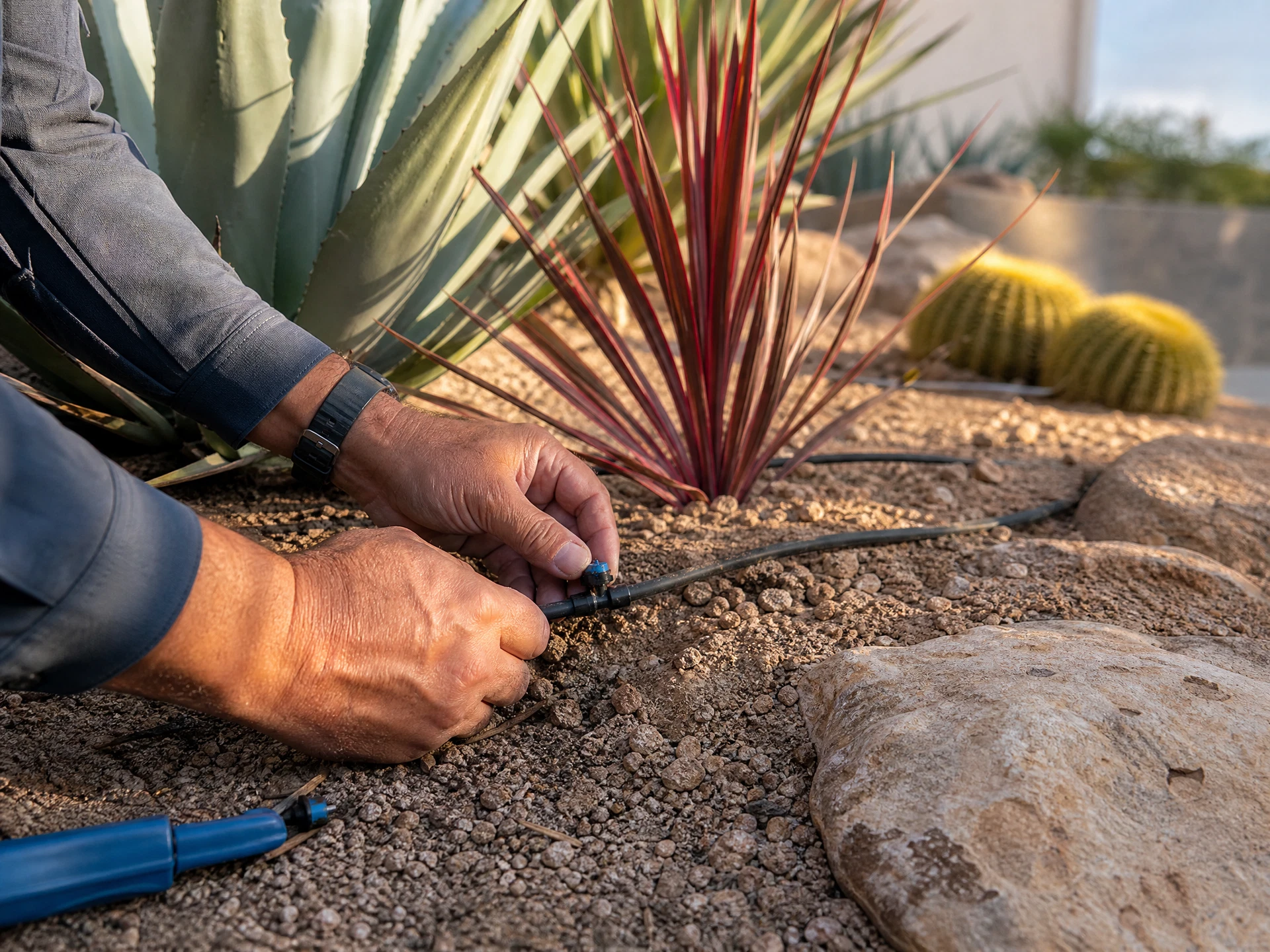
Additionally, performing regular maintenance on your irrigation system is vital. Check for clogged drip emitters or broken sprinkler heads, especially before the intense summer heat arrives. For lawns, conducting a simple "can test" by placing shallow cans around the grass while the sprinklers run can help you measure exactly how much water your system applies, allowing you to adjust run times accurately.[1][2]