The Importance of Summer Irrigation Preparation
Arizona's extreme summer heat places significant stress on landscapes, making an efficient irrigation system critical for plant survival. Before temperatures peak, a thorough inspection helps identify hidden leaks, broken sprinkler heads, and clogged drip emitters that can waste water and damage plants. Proper maintenance ensures that water is delivered precisely where it is needed, reducing runoff and evaporation.[1]
In addition to physical repairs, adjusting the watering schedule is essential for summer readiness. The Arizona Municipal Water Users Association (AMWUA) recommends transitioning to deep, infrequent watering to encourage deeper root growth and improve plant resilience. Updating your controller settings to water early in the morning further maximizes efficiency by minimizing evaporation loss.[2][1][2]
Key Steps for Inspecting Your System
A successful summer preparation strategy begins with a visual inspection of all irrigation components. The EPA WaterSense program advises homeowners to follow four simple steps: inspect, connect, direct, and select. This involves checking for broken or missing sprinkler heads, examining connections for leaks, redirecting spray away from sidewalks, and selecting the appropriate watering schedule on the controller.[1][1]
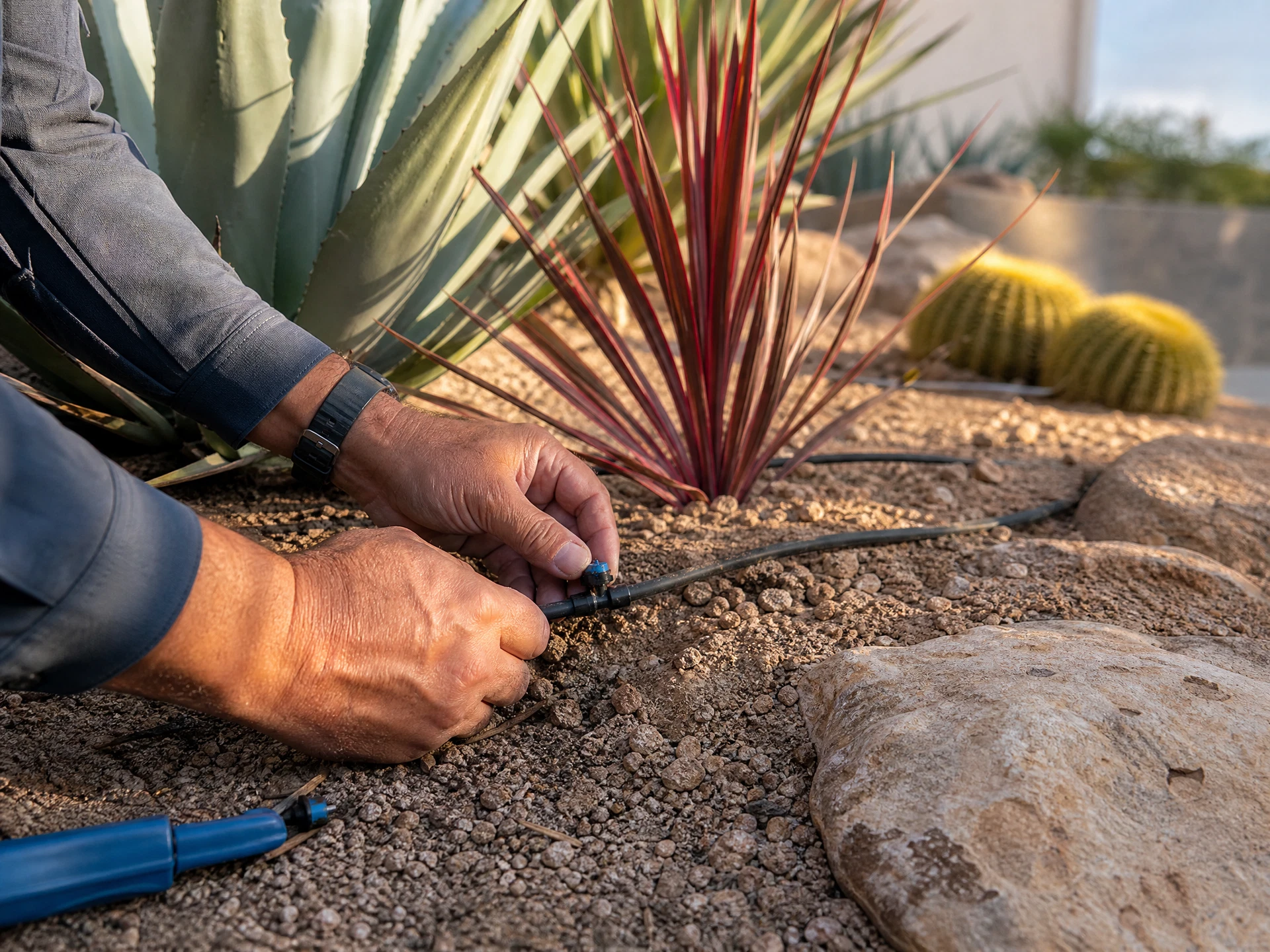
Testing each zone individually is crucial for identifying areas with weak flow or poor coverage. For drip systems, ensure that emitters are clear of mineral buildup and placed correctly at the edge of the plant's canopy, where active roots absorb water. Addressing these issues promptly prevents water waste and ensures that your landscape receives adequate hydration during the hottest months.[1][2]
Professional Irrigation System Tune-Ups
While regular homeowner maintenance is valuable, a professional irrigation tune-up provides a comprehensive system calibration tailored to the Arizona climate. Technicians perform zone-by-zone testing to verify water pressure, ensure full coverage without dry spots, and properly align sunken or tilted sprinkler heads. This detailed inspection can catch minor issues before they escalate into costly repairs during the peak of summer.[3]
Furthermore, professionals can optimize irrigation controllers, including smart timers, to align with seasonal watering guidelines and local water restrictions. By calibrating run times and programming weather features, a professional tune-up not only protects your landscape investment but can also lead to measurable reductions in monthly water bills.[3]