Desert Heat and Hard Water Issues
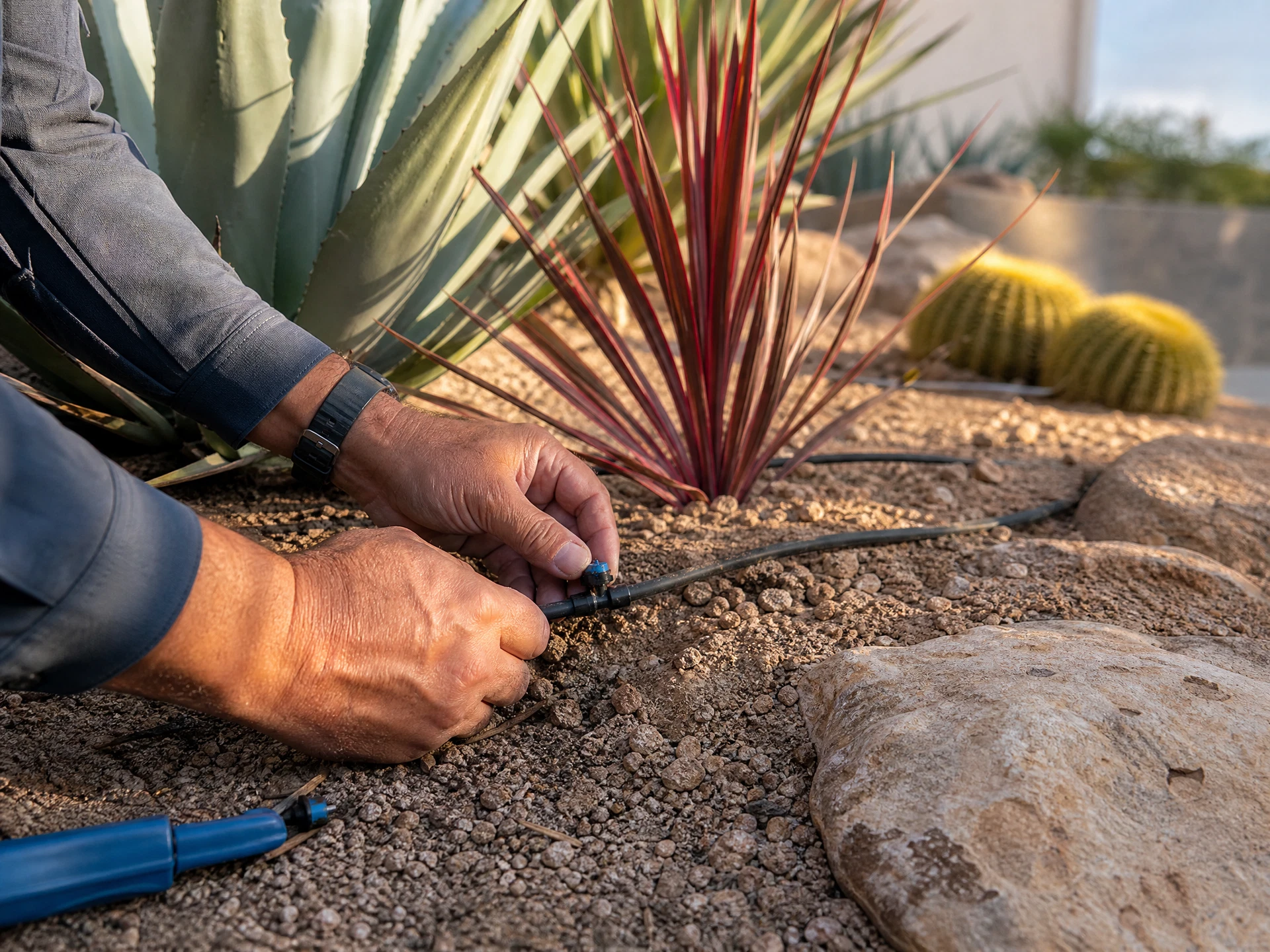
Scottsdale's extreme environment places constant stress on drip irrigation components. The most pervasive issue is the region's hard water, which is rich in calcium and alkali. These minerals accumulate rapidly inside the tiny orifices of drip emitters, forming a white crust that eventually restricts or completely blocks water flow. Even emitters marketed as self-cleaning often succumb to this calcification, requiring regular replacement to ensure plants receive adequate hydration.[1]
In addition to water quality, intense ultraviolet radiation degrades exposed poly tubing. While poly pipe is flexible and easy to install, the desert sun breaks down its molecular structure, causing it to become brittle and crack over time. These hairline fractures can quickly turn into significant leaks, wasting thousands of gallons of water each month and threatening the survival of desert-adapted plants that rely on precise, deep watering schedules.[2]
Diagnosing Leaks and Pressure Failures
Pressure regulation is a critical component of any drip system, and its failure is a common source of trouble in Scottsdale. Drip irrigation operates efficiently at low pressures, typically around 20 to 30 PSI. When a pressure regulator fails, the increased force can blow emitters off their stakes or cause water to mist into the air rather than soaking into the soil. Homeowners should look for these signs, as well as uneven watering where plants near the valve are flooded while those at the end of the line remain dry.[1]
Underground leaks are another silent threat, often masked by decorative granite or caliche soil that forces water to travel horizontally rather than draining straight down. A sudden, unexplained spike in the monthly water bill is frequently the first indicator of a hidden leak. To diagnose this, homeowners can perform a wet spot test by looking for unusually dark gravel or spongy soil hours after the irrigation cycle has completed, signaling a compromised line or fitting beneath the surface.[2]
Preventative Maintenance in Scottsdale
Consistent preventative maintenance is crucial for sustaining a drip irrigation system in the Sonoran Desert. Homeowners should conduct a thorough visual inspection of their entire system at least once a season. This involves turning the system on and walking the lateral lines to check for missing emitters, small geysers, or pooling water that indicates a subsurface leak. Catching these minor issues early prevents them from escalating into costly repairs and significant water waste.[1]
Adjusting the irrigation controller to match seasonal weather patterns is equally important. Scottsdale landscapes require vastly different watering schedules during the peak summer heat compared to the cooler winter months. Utilizing a weather-based controller or manually updating run times ensures that plants receive the deep, infrequent watering they need to develop strong root systems without succumbing to rot or drought stress.[1][2]