Efficiency in the Desert Heat
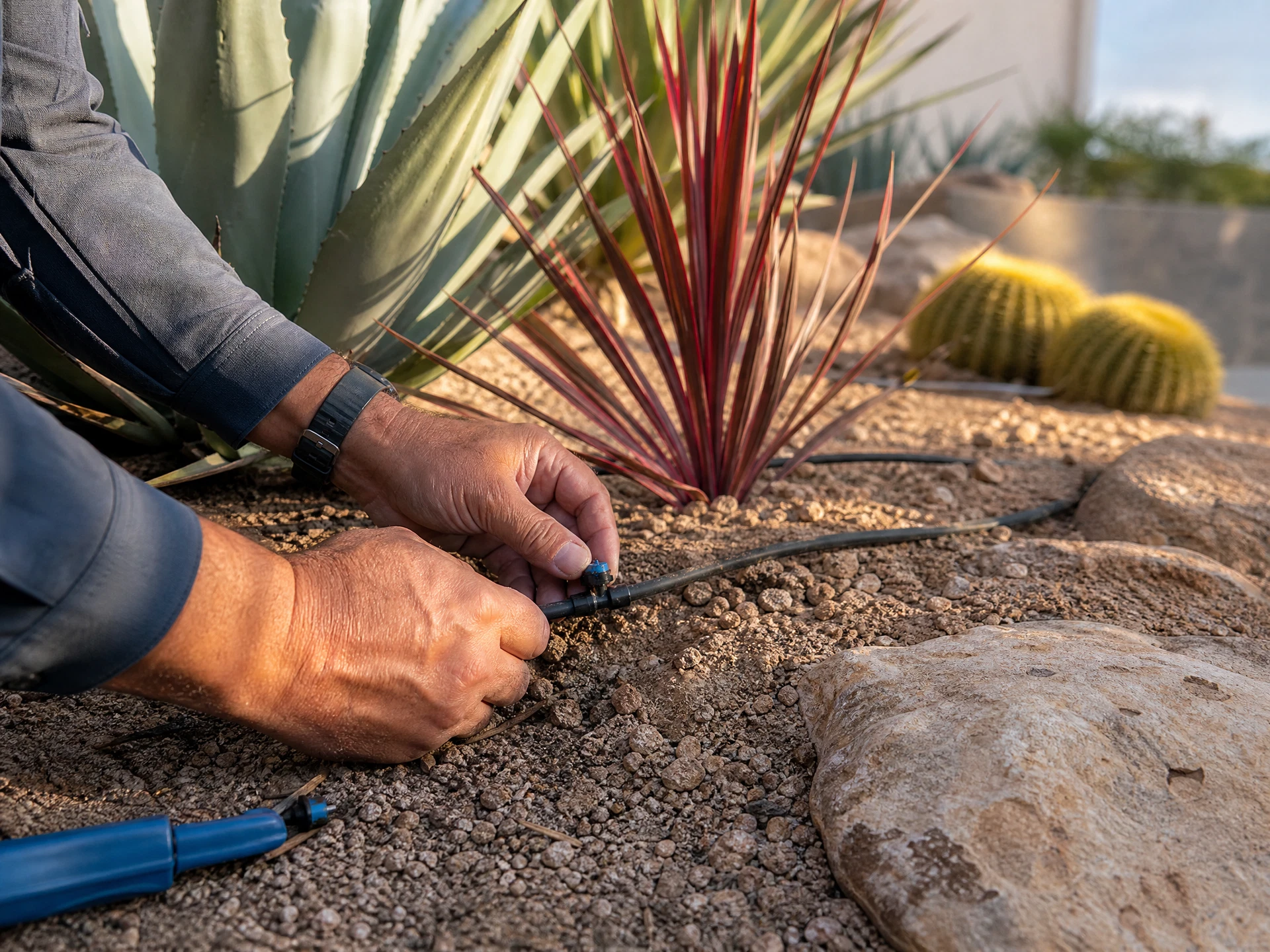
Drip irrigation, also known as low-flow or micro-irrigation, is designed to apply water slowly and directly to the soil. This method is particularly effective in Arizona because it minimizes water loss due to evaporation and runoff, which are common issues with traditional sprinkler systems in hot, arid climates. By delivering water precisely where it is needed, drip systems ensure that plants receive adequate moisture without wasting water on bare soil.[1][1][2]
The slow application of water allows it to penetrate deeply into the soil, encouraging plants to develop deep, robust root systems. Deep roots are crucial for landscape plants in Arizona, as they help the plants withstand extreme summer temperatures and periods of drought. Furthermore, because the water is targeted at the plant's root zone, weed growth is significantly reduced.[1][1][1]
Components and Operation
A typical drip irrigation system consists of several key components, including a controller, valves, a pressure regulator, filters, and emitters. The controller automates the watering schedule, while the pressure regulator ensures the water pressure is reduced to the low levels (usually around 20 psi) required for drip systems to function correctly. Filters are critical for keeping the small openings of the emitters free from debris that could block water flow.[1][1][1]
Proper design and zoning are essential for a successful drip system. Plants with similar water requirements should be grouped together on the same valve to prevent over- or under-watering. Sprinkler systems can sometimes be converted to drip irrigation, but this requires installing a pressure reducer and filter, and ensuring that all sprinklers on that specific valve are converted, as they operate at different rates and pressures.[1][1]
Adapting to Arizona Landscapes
Drip irrigation is highly versatile and well-suited for the diverse planting found in Arizona landscapes, including desert-adapted shrubs, trees, and potted plants. However, it is important to note that drip systems are generally not recommended for turf areas. As landscapes mature, the irrigation system must be adapted; emitters should be moved outward to the edge of the plant's canopy, or dripline, where the active roots are located.[1][1][1]
While drip systems are efficient, they require regular maintenance due to Arizona's harsh environment. High temperatures and sun exposure can degrade plastic tubing over time, and the state's hard water can lead to mineral buildup that clogs emitters. Homeowners should periodically inspect their systems for leaks and clean the filters, but complex issues like pressure regulation or backflow prevention often necessitate professional assistance.[1][2][1]