Understanding Deep Watering in the Desert
Arizona’s extreme heat requires a different approach to watering than other climates. To build resilient plants, water must reach the entire root zone, which means watering deeply rather than frequently. For trees, water should penetrate to a depth of three feet, while shrubs require moisture down to two feet.[1][2]
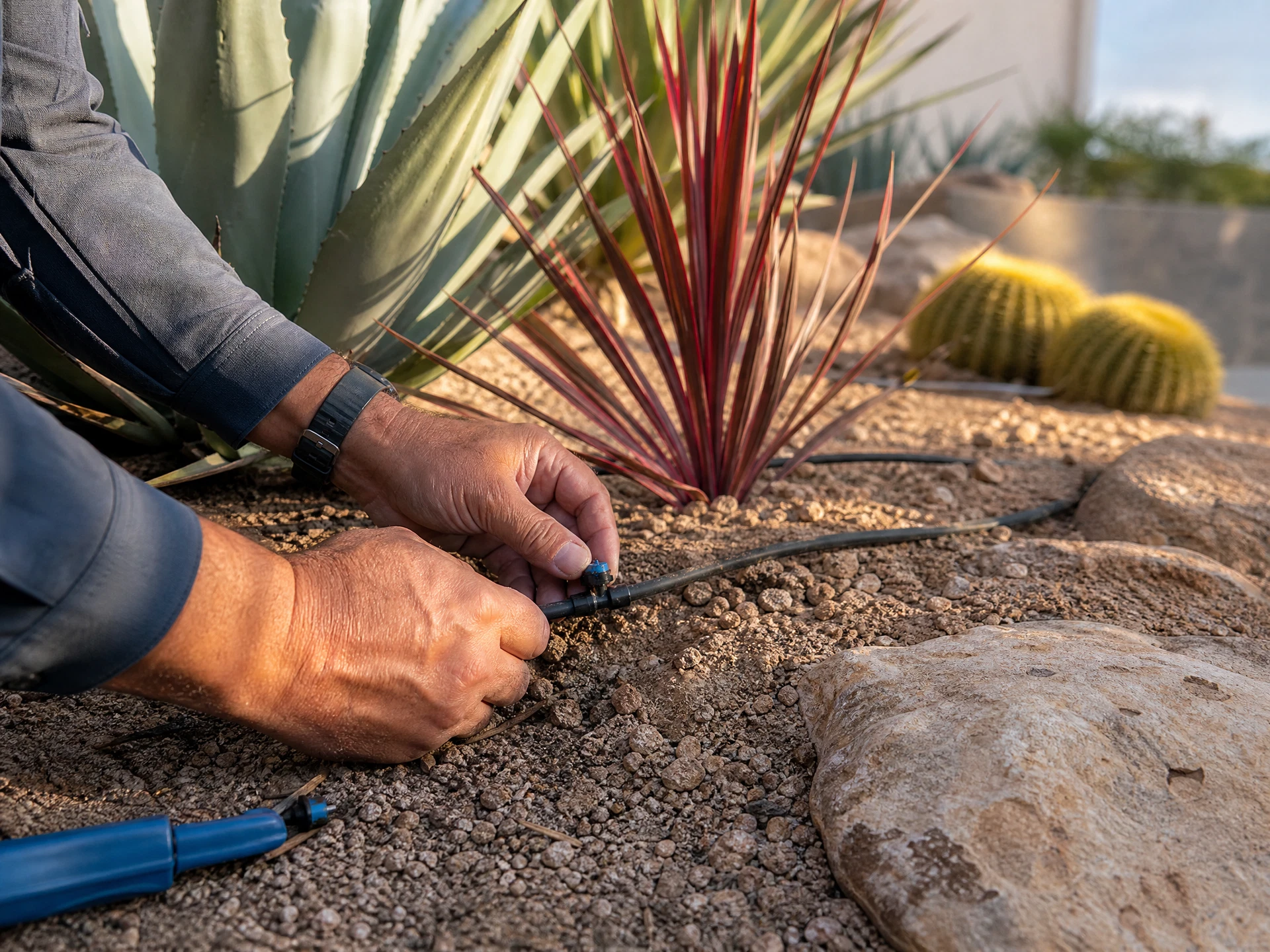
Because drip emitters apply water slowly—typically measured in gallons per hour—achieving these depths takes time. Running a drip system for just 15 or 30 minutes only wets the surface, leading to shallow roots that cannot survive the intense summer sun. Therefore, drip run times are typically two hours or more for each watering session.[1][2]
Calculating Your Ideal Run Time
Determining the exact run time for your yard depends on the output of your drip emitters and the water requirements of your plants. Emitters are usually rated in gallons per hour (GPH), such as 1 GPH or 2 GPH. You can calculate the total output by multiplying the number of emitters on a plant by their flow rate.[1]
For example, a medium-sized shrub might need several gallons of water to wet its root zone adequately. If you use low-flow emitters, it will take a few hours to deliver that volume. As plants grow, you should add more emitters and move them out to the dripline (the outer edge of the canopy) rather than increasing the run time indefinitely.[1][2]
Adjusting for Arizona Seasons
A common mistake homeowners make is changing how long their drip system runs when the weather gets hot. Instead, the run time should remain constant to ensure deep watering, while the frequency of watering should be adjusted. During the peak summer heat from May to October, established desert-adapted shrubs may need water every 7 to 14 days, whereas high-water-use shrubs need it every 5 to 7 days.[1][2]
In the cooler winter months, the frequency drops significantly. Desert-adapted shrubs can often go 30 to 45 days between waterings. Regularly updating your irrigation controller to match the season is one of the most effective ways to conserve water and maintain a healthy landscape in the Phoenix metro area.[2][1][2]