Primary Causes of Drip System Leaks
One of the most frequent causes of drip irrigation leaks is unregulated high water pressure. Standard drip systems are designed to operate between 20 and 40 PSI; when pressure exceeds this range, it can blow emitters off the tubing or cause fittings to separate. Without a proper pressure regulator installed at the valve, the constant stress weakens connections and leads to significant water loss.[1]
Another major factor, especially in the Phoenix area, is the harsh desert environment. Ultraviolet (UV) rays from intense sunlight can degrade exposed polyethylene tubing over time, making it brittle and prone to cracking. Additionally, local wildlife such as rabbits and rodents often chew through the tubing in search of water during dry periods, creating small but continuous leaks.[2][1][2]
Identifying Leaks in Your Drip System
Detecting leaks in a drip irrigation system can be challenging because the water is delivered slowly and often under mulch or soil. Homeowners should look for signs such as unusual puddling, overly saturated soil in specific areas, or sudden drops in water pressure across the system. A significant increase in your monthly water bill can also be an early indicator of a hidden leak.[1]
Regularly inspecting the system while it is running is the best way to spot issues. Listen for hissing sounds near the valves or along the main tubing lines, and visually check emitters to ensure they are dripping rather than spraying or flowing heavily. Catching these signs early prevents plant loss and structural damage to nearby hardscaping.[2]
Effective Solutions for Arizona Homeowners
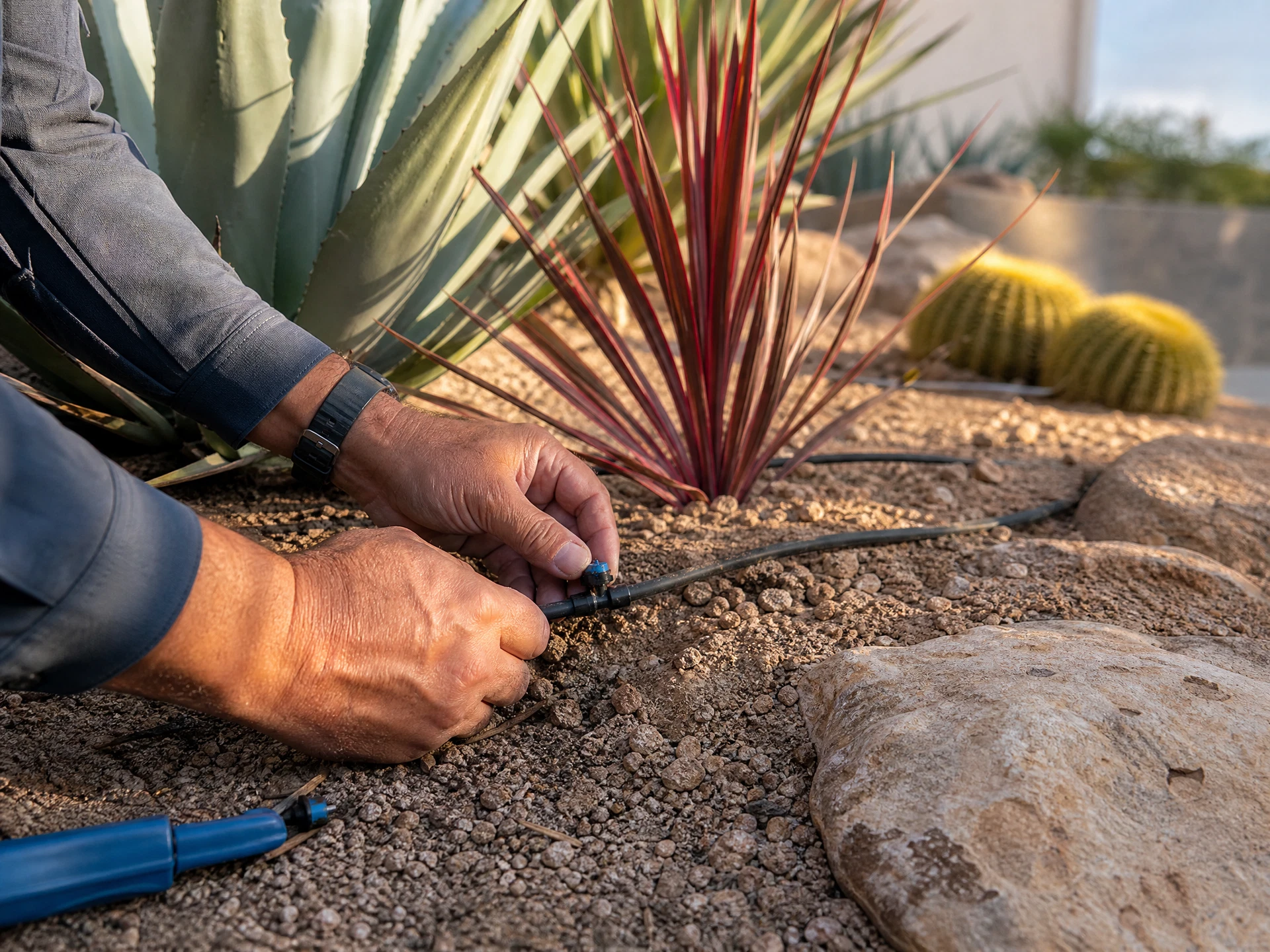
Addressing drip leaks promptly is critical in Arizona's arid climate to conserve water and protect expensive landscaping. Minor repairs, such as replacing a clogged or blown-out emitter, can often be handled by pushing a new emitter into the existing hole or using a goof plug to seal it. For damaged tubing sections, a clean cut and a barbed coupling can restore the line's integrity.[2]
However, if the leaks are caused by systemic issues like missing pressure regulators, faulty zone valves, or extensive UV degradation, professional intervention is necessary. An irrigation specialist can properly diagnose pressure problems, upgrade components to withstand local conditions, and ensure the entire system operates efficiently without wasting water.[1]