Identifying the Cause of Broken Tubing
Drip irrigation tubing in the Phoenix area is subjected to intense UV radiation and extreme summer heat, which accelerates the degradation of polyethylene materials. Over time, exposed tubing becomes brittle and prone to cracking or splitting under normal water pressure. Additionally, physical damage from landscaping tools, rodent activity, or shifting soil can puncture or sever the lines.[1]
Identifying the exact cause of the break is crucial for a lasting repair. A clean cut from a shovel requires a simple splice, whereas a blowout caused by excessive pressure might indicate a failed pressure regulator. Understanding these factors helps determine whether a localized repair is sufficient or if broader system maintenance is needed.[2]
Steps for Splicing Drip Lines
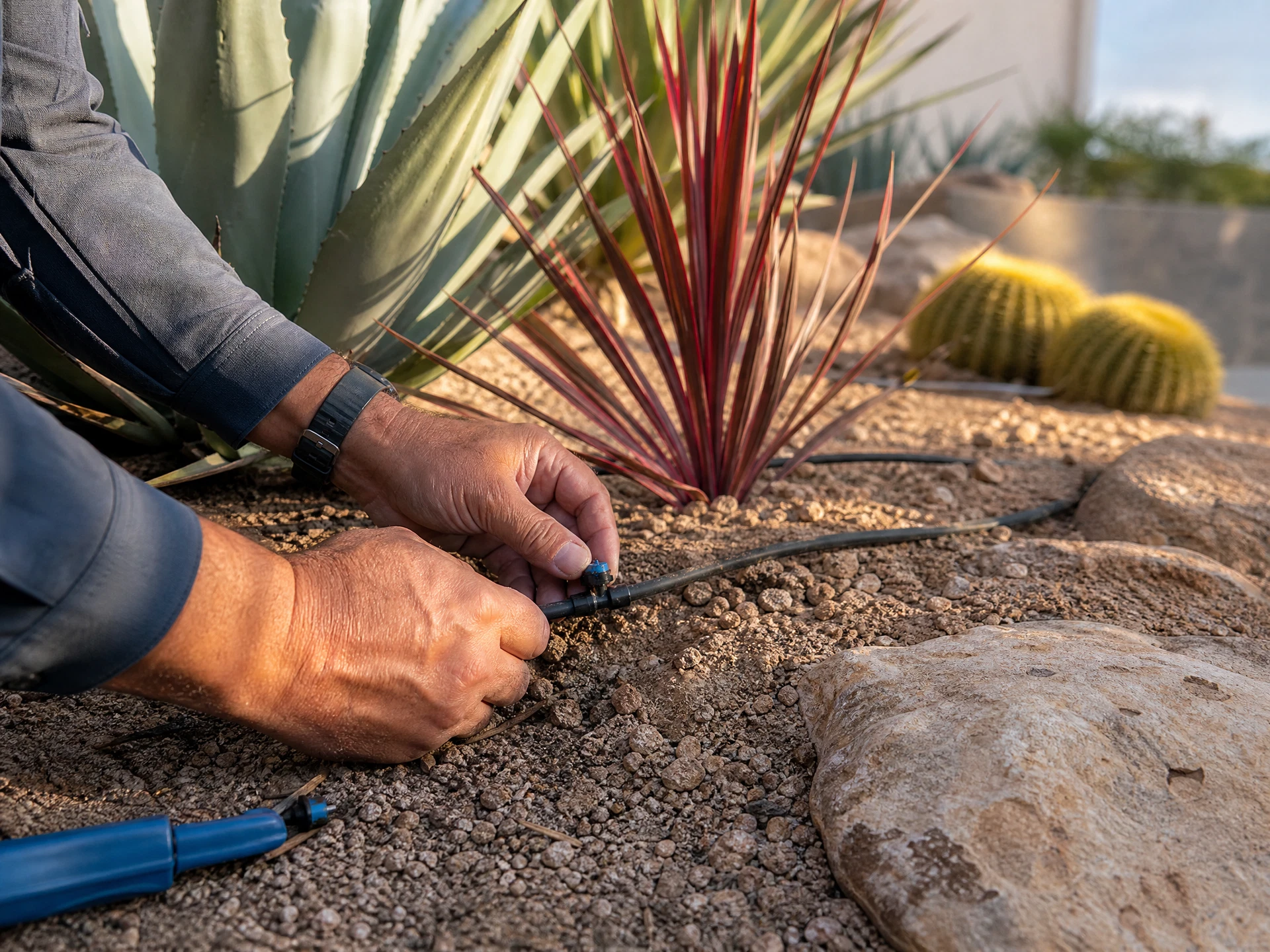
The most effective way to repair a broken drip line is by using a barbed or compression coupling. First, turn off the water and cut away the damaged section using specialized pipe cutters to ensure a clean, square edge. It is essential to verify the tubing's exact outer diameter, as half-inch tubing varies slightly among manufacturers; using a universal compression fitting can bridge these differences reliably.[1]
Once the damaged section is removed, push the tubing firmly into the coupling until it is secure. If the removed section is lengthy, splice in a new segment of matching tubing using two couplings. Before closing the system, turn on the water briefly to flush out any dirt or debris that may have entered the line during the repair process, preventing clogged emitters downstream.[2]
Managing Aging Arizona Drip Systems
In the harsh Arizona climate, patching a single leak in older, brittle drip tubing is often only a temporary fix. When polyethylene tubing loses its flexibility and starts to turn white or chalky, it has reached the end of its lifespan and will likely continue to break in other locations. In these cases, repeatedly repairing individual breaks becomes inefficient and risks significant water loss.[1]
Homeowners should consider replacing entire sections of degraded tubing and covering the new lines with a layer of mulch or rock to protect them from direct UV exposure. If a yard has extensive damage or if the system continually experiences high-pressure blowouts, consulting an irrigation specialist is recommended to evaluate the pressure regulator and design a more durable layout.[1][2]