Understanding Smart Controllers And Rain Sensors
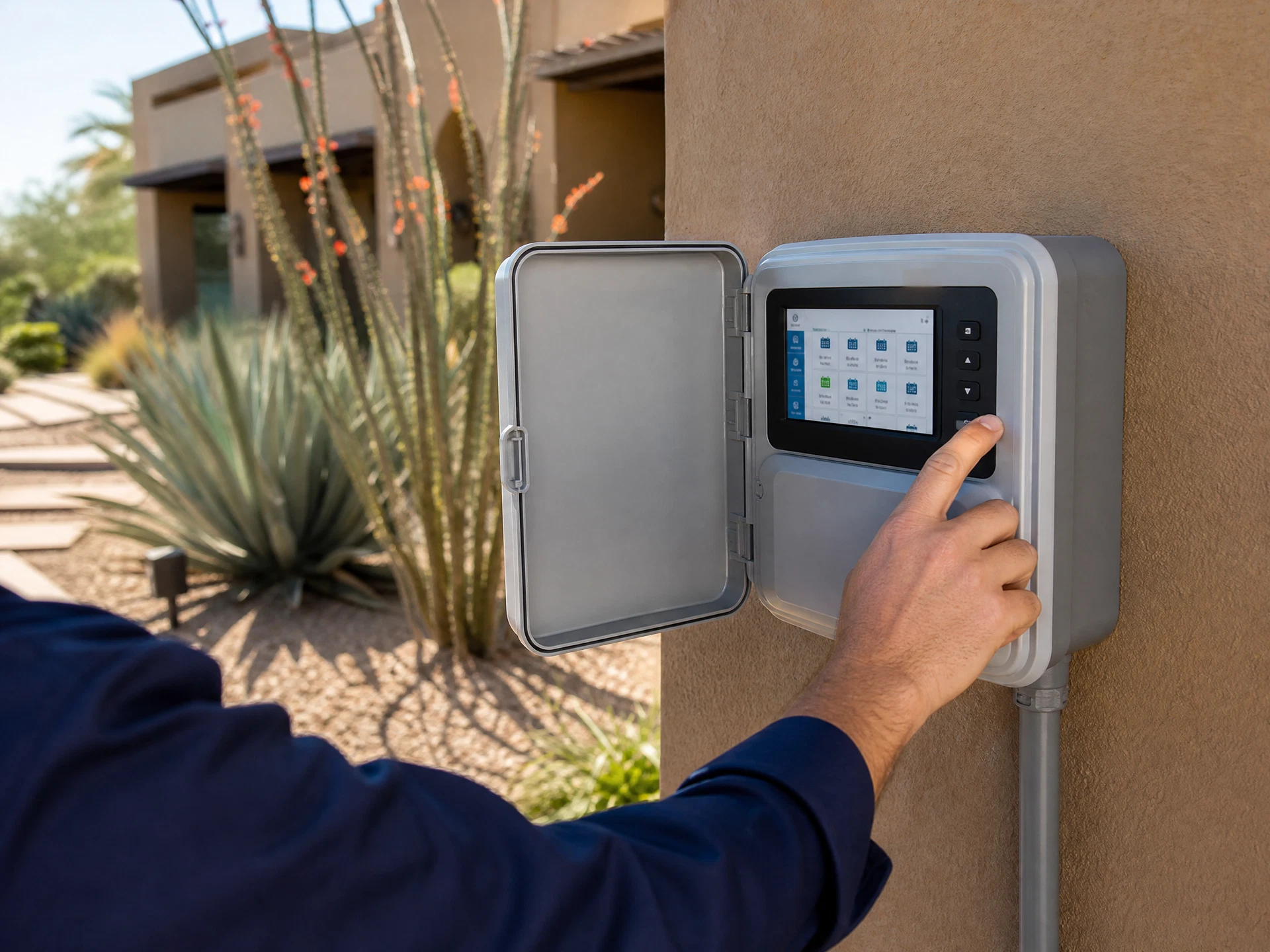
Smart irrigation controllers revolutionize landscape watering by using real-time weather data and evapotranspiration rates to adjust schedules automatically. These devices, often labeled by EPA WaterSense, connect to the internet to pull localized forecasts, allowing them to increase watering during intense heat or skip cycles when rain is predicted. This predictive capability significantly reduces water waste compared to traditional fixed-schedule timers.[1]
A rain sensor, in contrast, is a physical device installed on your property that reacts to immediate, on-site precipitation. When measurable rain falls, internal discs expand and interrupt the controller's circuit, pausing the irrigation cycle. While a smart controller relies on data feeds, a rain sensor provides ground-truth confirmation of rainfall at your exact location.[2]
Do You Need Both Devices?
For many homeowners, a high-quality smart controller provides sufficient weather-responsive watering. However, integrating a physical rain sensor adds a valuable layer of redundancy. The EPA WaterSense program recognizes both technologies, and some local municipalities or rebate programs may require or strongly encourage the use of a physical rain sensor even if a smart controller is present.[1]
The primary benefit of using both is localized accuracy. If your smart controller loses its Wi-Fi connection or the regional weather feed is inaccurate, the physical rain sensor acts as a fail-safe. It ensures your sprinklers won't run during a downpour, protecting your landscape from oversaturation and preventing costly water waste.[2]
Arizona Monsoon Challenges And Solutions
Arizona's monsoon season presents unique challenges for irrigation management. Intense, highly localized storms can dump significant rain on one neighborhood while leaving adjacent areas completely dry. In these scenarios, a smart controller relying on regional weather station data might miss the localized downpour, leading to unnecessary watering and potential plant damage.[2]
Adding a physical rain sensor to a smart controller creates a robust, redundant safety system ideal for Phoenix-metro homes. The rain sensor acts as an immediate override, instantly halting irrigation during a sudden storm, while the smart controller manages the broader seasonal adjustments. This combination ensures your desert landscape receives optimal hydration without wasting water during unpredictable monsoon events.[1][2]