Understanding Smart Irrigation Controllers
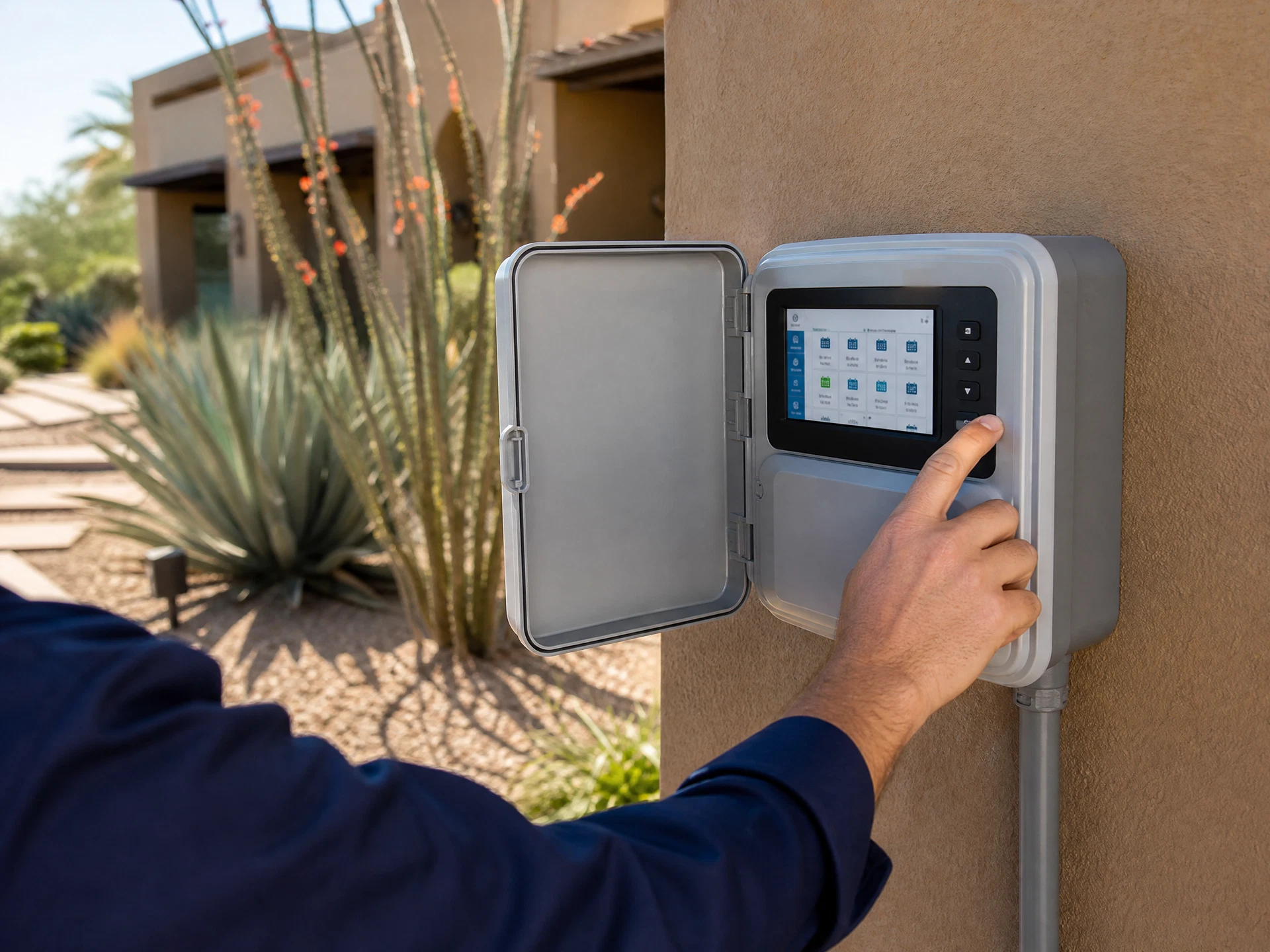
Smart irrigation controllers, often referred to as weather-based irrigation controllers (WBICs), represent a significant advancement over traditional clock-based timers. Instead of watering on a fixed schedule regardless of the weather, these devices use local weather data and landscape conditions to tailor watering schedules. By automatically adjusting the amount, frequency, and timing of landscape watering, smart controllers ensure that plants receive the right amount of water without unnecessary waste.[1]
The U.S. Environmental Protection Agency's WaterSense program labels smart controllers that meet specific efficiency and performance criteria. These certified devices are designed to adequately meet the watering needs of a landscape without overwatering. For homeowners in the Phoenix metro area, upgrading to a WaterSense labeled smart controller is a proactive step toward significant water conservation.[1][1]
Benefits of Upgrading Your System
One of the primary benefits of upgrading to a smart irrigation controller is the potential for substantial water savings. The EPA estimates that replacing a standard clock-based controller with a WaterSense labeled model can save an average home nearly 7,600 gallons of water annually. This reduction in water waste not only benefits the environment but can also lead to noticeable savings on monthly water bills, particularly during the peak watering season.[1]
Beyond water and cost savings, smart controllers offer unparalleled convenience. Many models connect to home Wi-Fi networks, allowing homeowners to monitor and manage their irrigation systems remotely via smartphone apps. This connectivity enables users to easily pause watering during unexpected rainstorms or adjust schedules while away on vacation. Furthermore, the automatic adjustments made by the controller help maintain healthier plants by preventing the root rot and disease often associated with overwatering.[1]
Arizona Considerations and Rebates
In the unique climate of the Sonoran Desert, it is crucial to select a smart controller capable of adjusting watering frequency, rather than just the run time. Desert-adapted plants often require infrequent but deep watering, which changes drastically between the intense heat of summer and the cooler winter months. A controller that can adjust the days between watering events is essential for maintaining a healthy, water-efficient landscape in Arizona.[2]
Many local municipalities and utilities in the Phoenix metro area encourage the adoption of smart irrigation technology through rebate programs. For instance, the City of Chandler offers rebates of up to $250 for water utility customers who install WaterSense listed smart controllers. Taking advantage of these programs can significantly offset the initial cost of upgrading.[2]