How Smart Controllers Optimize Watering
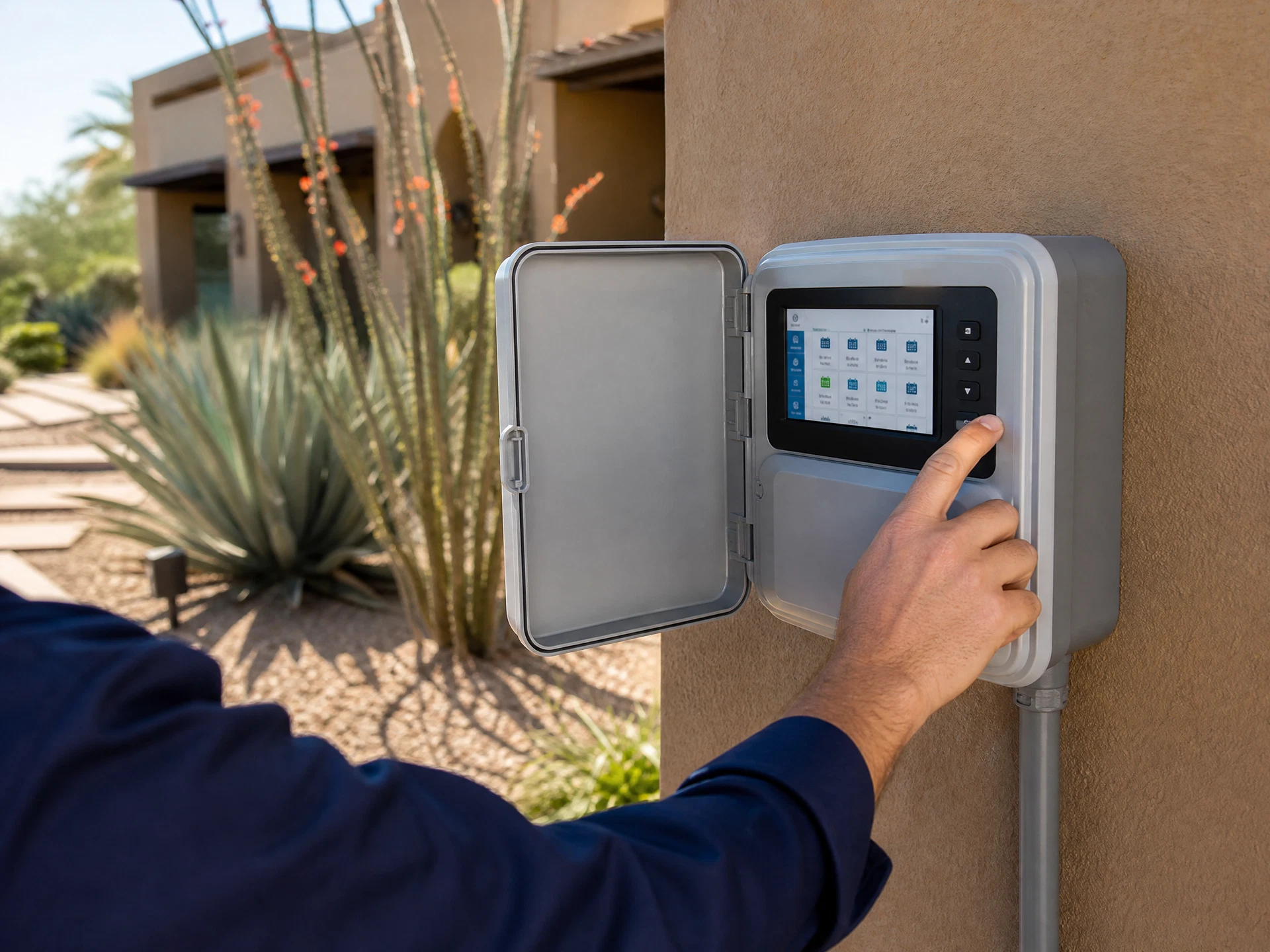
Smart irrigation controllers replace traditional clock-based timers by automatically tailoring watering schedules to actual landscape needs. Weather-based controllers use local meteorological data, such as temperature, precipitation, and solar radiation, to adjust run times. This ensures that your lawn and desert plants receive the right amount of water, preventing overwatering during cooler months or after rainfall.[1]
By adapting to environmental changes, these controllers eliminate the need for manual seasonal adjustments. Replacing a standard timer with an EPA WaterSense labeled smart controller can save an average home up to 15,000 gallons of water annually. For Phoenix-metro homeowners, this technology provides a convenient way to maintain a healthy landscape while significantly reducing outdoor water waste.[1]
Types of Smart Irrigation Technology
There are two primary categories of smart irrigation technology: climate-based controllers and soil moisture-based controllers. Climate-based, or evapotranspiration (ET), controllers gather local weather information to calculate the amount of water lost to evaporation and plant transpiration. They then adjust the irrigation schedule to replace only the water that was lost, ensuring efficient hydration.[2]
Soil moisture sensor controllers rely on sensors placed belowground in the root zone to measure the actual volumetric water content of the soil. The controller bypasses scheduled irrigation cycles if the soil moisture is above a user-defined threshold. Both technologies are effective at reducing water usage, and some advanced controllers even combine weather data with soil moisture readings for ultimate precision.[2][1][2]
Maximizing Water Savings in Arizona
To get the most out of a smart controller in the Sonoran Desert climate, it is crucial to select a model capable of adjusting watering frequency rather than just run time. Desert-adapted plants may need weekly watering in the summer but only monthly watering in the winter. Ensuring your controller can alter the days between watering cycles is key to deep, infrequent irrigation that promotes healthy root growth.[3]
Proper setup is equally important for maximizing efficiency. When programming the controller, homeowners must input accurate information about their yard's soil type, plant varieties, and sprinkler application rates. Taking advantage of resources like local municipal watering guides or text alerts can help fine-tune these settings, ensuring the system operates efficiently year-round.[3]