Common Causes Of Single Station Failure
When an irrigation controller fails to activate a single station while others operate normally, the issue is typically isolated to the electrical components or the specific valve for that zone. The most frequent culprit is a defective solenoid, which is the electromagnetic coil that opens the valve when it receives voltage from the controller. Over time, solenoids can wear out, short circuit, or suffer from internal wire breaks, preventing them from actuating the valve mechanism.[1]
Another common cause is compromised field wiring between the controller and the valve. The wires running underground are susceptible to damage from landscape work, shifting soil, or rodent activity. Additionally, the wire splices inside the valve box are a primary point of failure; if the waterproof connectors deteriorate, moisture can cause corrosion, breaking the electrical connection required to signal the valve.[2]
Troubleshooting The Electrical Path
To isolate the problem, the first step is to verify whether the issue is mechanical or electrical. Homeowners can manually open the affected valve by turning the solenoid or the bleed screw a quarter-turn counterclockwise. If the sprinklers turn on, the water supply and valve diaphragm are functional, confirming the problem lies within the electrical system connecting the controller to the valve.[1]
Electrical troubleshooting involves testing the voltage and resistance. At the controller, a multimeter can verify if 24 to 28 VAC is being sent to the station terminal when activated. To check the field wiring and solenoid, measuring the resistance (ohms) across the station wire and the common wire can reveal shorts or breaks. A reading between 20 and 60 ohms generally indicates a healthy circuit, while a reading of zero suggests a short, and infinite resistance points to a severed wire or blown solenoid.[2]
When To Call An Arizona Irrigation Professional
While homeowners can perform basic checks, diagnosing and repairing underground electrical issues often requires professional expertise. If a multimeter test indicates a severed field wire, locating the exact point of the break in a Phoenix yard requires specialized wire tracking equipment. Irrigation professionals can trace the wire path and pinpoint the fault without unnecessary digging, saving time and landscape disruption.[1]
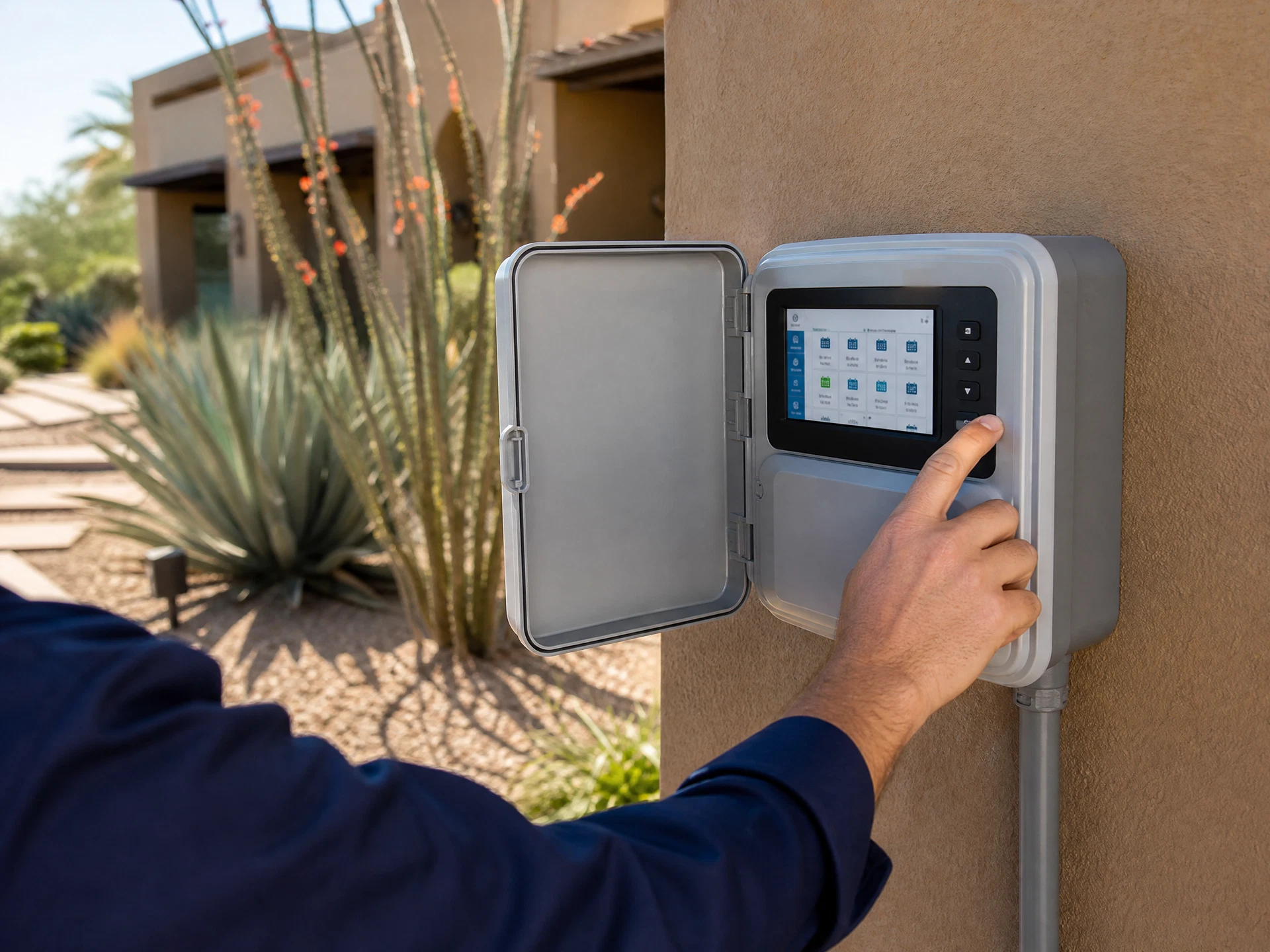
Additionally, if the controller is displaying persistent error codes or failing to output the required 24 VAC to the station terminal, a professional can determine whether the controller itself needs replacement. In cases where the valve manifold is old or the solenoid is obsolete, a technician can upgrade the components to ensure reliable operation in the harsh Arizona climate.[2]