Understanding Controller Start Times
A common misunderstanding with irrigation controllers is how start times function. When you assign a start time to a program, it tells the controller to begin watering the first zone and then proceed sequentially through all active zones in that program. Homeowners often mistakenly enter a separate start time for each zone, thinking they need to schedule them individually.[1][2]
Because the controller interprets each start time as a command to run the entire program, entering multiple start times causes the system to repeat the full watering cycle. For example, if a program has three zones and two start times, all three zones will run back-to-back, and then the entire sequence will run again.[2][1]
Identifying Overlapping Programs
Another frequent cause of double watering is overlapping programs. Most modern controllers offer multiple programs (usually labeled A, B, and C) to allow different watering schedules for different types of plants, such as grass and desert shrubs. If the same zone is assigned to both Program A and Program B, it will water whenever either program is triggered.[1][1]
To prevent this, it is crucial to ensure that each zone is only assigned to one active program unless specifically intended. Reviewing the run times for each zone across all programs can help identify unintentional overlaps. If a zone is scheduled in multiple programs, adjust the settings to consolidate its watering schedule into a single program.[1]
Fixing the Double Watering Issue
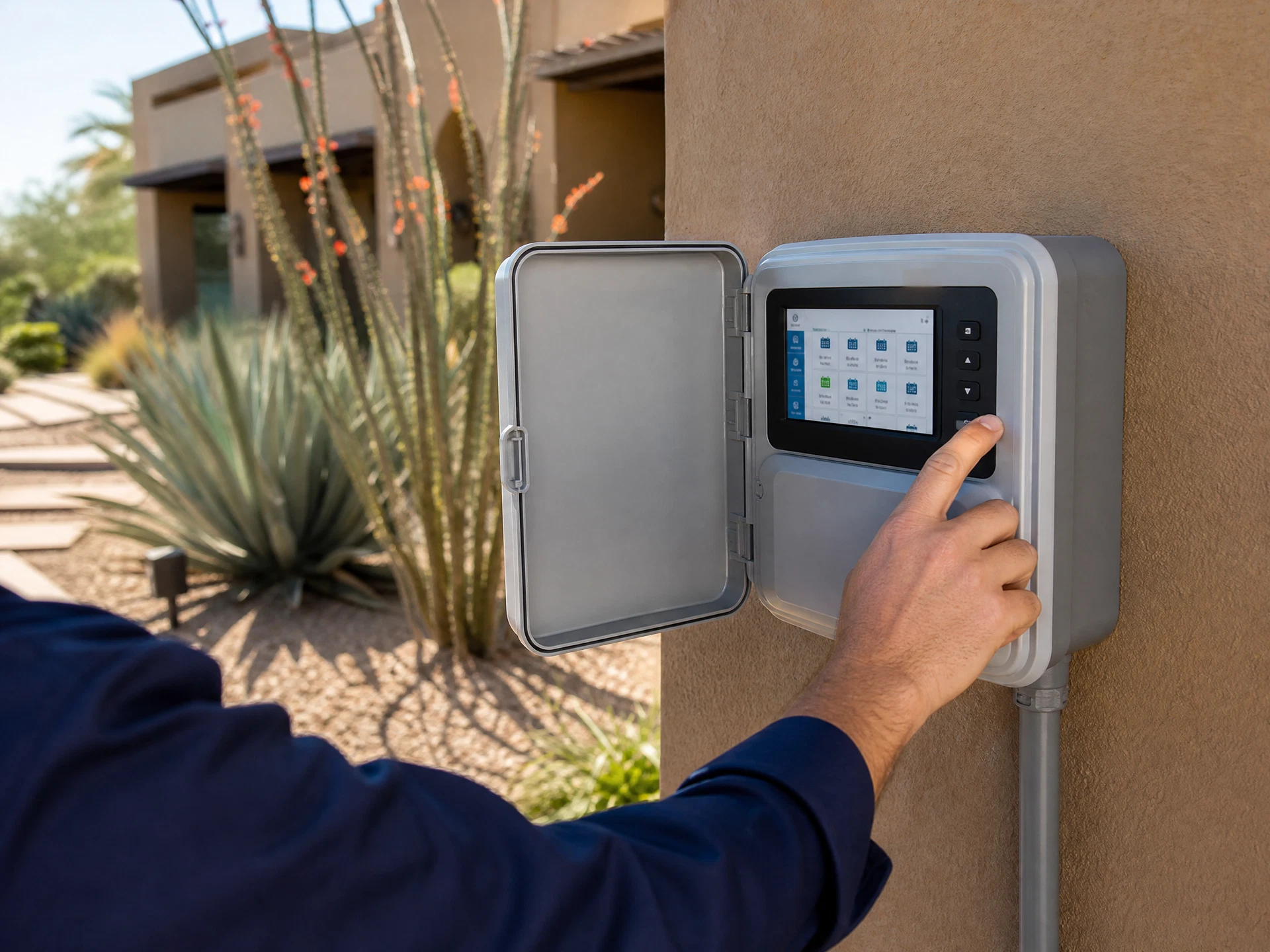
To resolve double watering, begin by checking the start times for each program on your controller. Turn the dial to the start times position and cycle through the settings. Ensure that only one start time is active per program, and set any additional start times to the "OFF" position. This simple adjustment often resolves the issue immediately.[1][2]
If the start times are correct, verify that zones are not duplicated across multiple programs. Additionally, consider upgrading to a smart, weather-based controller. These controllers automatically adjust watering schedules based on local weather conditions, reducing the likelihood of programming errors and potentially saving up to 30 percent on irrigation water use.[3]